Written accounts
The Eddic poems preserve different voices; Snorri arranged and explained myths in medieval Iceland. Neither gives a complete record of every community's earlier beliefs.
Read Völuspá ↗From Ymir and the first people to the gods, giants, elves, dwarves, norns, and the great tree, follow the surviving accounts and bring your own questions to the hearth.
Explore the guide ↓In the sources describes a surviving account. For today is a question for modern reflection, not a claim about what all Norse people believed.
The paintings are modern interpretations guided by the stories; no certain likenesses of these beings survive. Some names appear once, and there is no complete, agreed-upon pantheon.
These stories come chiefly from medieval texts written down after the Viking Age. The poems, Snorri’s prose, archaeology, and modern practice should be read as distinct kinds of evidence.
The Eddic poems preserve different voices; Snorri arranged and explained myths in medieval Iceland. Neither gives a complete record of every community's earlier beliefs.
Read Völuspá ↗Old Norse religion varied across regions and periods. Ritual, burial, offerings, names, and household life supply evidence beyond the literary stories.
Explore the museum account ↗Modern Heathens learn from these traces and make living choices about hospitality, justice, stewardship, and kinship. The reflection questions below are invitations, never ancient commandments.
Read our community charter ↗55 entries shown
Creation, the first people, the tree, and the end that becomes another beginning.
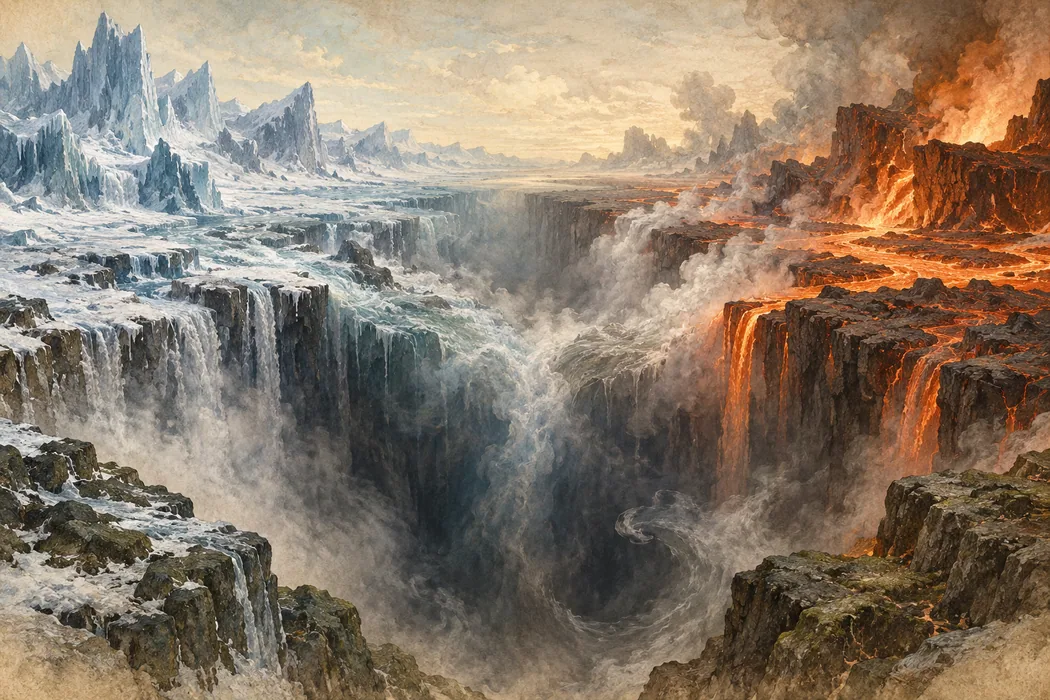
The Prose Edda places the meeting of icy Niflheim and fiery Muspelheim in a primordial gap; from this meeting comes Ymir.
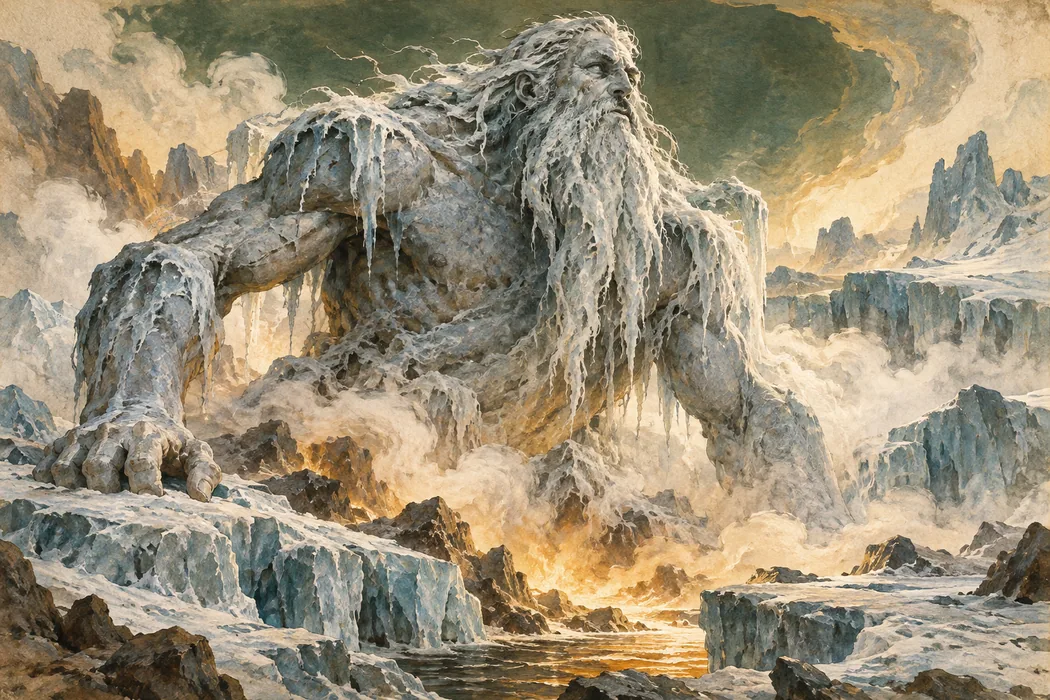
The primeval being is born before the world as we know it. Odin and his brothers kill Ymir; his body becomes earth, sea, sky, and mountains. Creation here involves violence, not a tidy beginning.
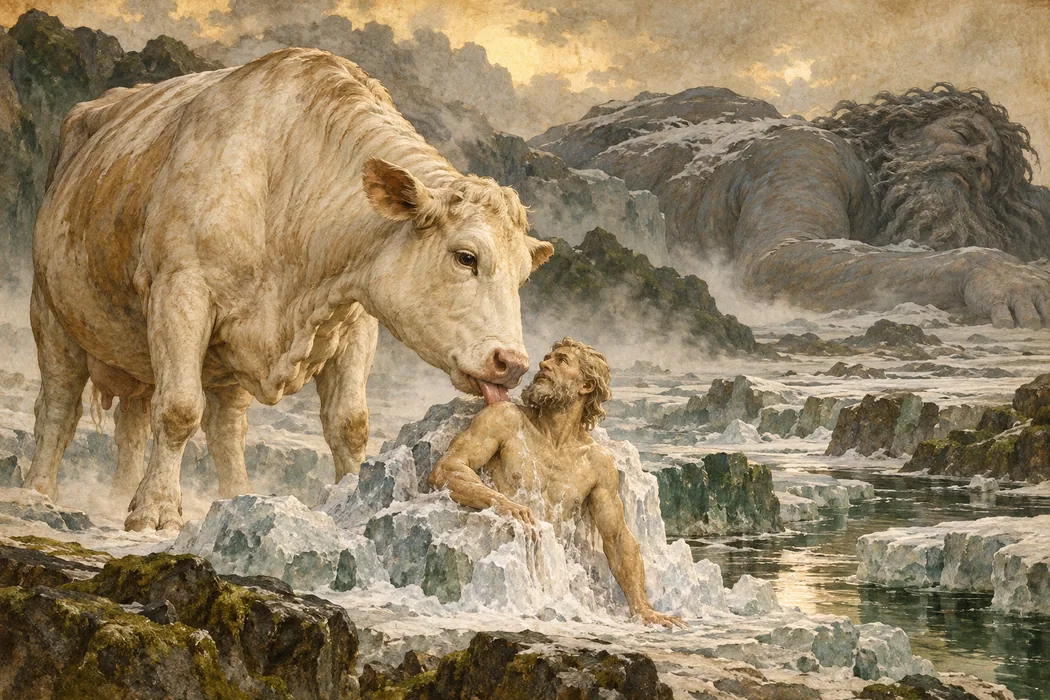
In Snorri’s telling, the cow Auðhumla nourishes Ymir and licks Búri from salty ice. Búri is an ancestor of Odin and his brothers; this detail belongs especially to the later Prose Edda account.
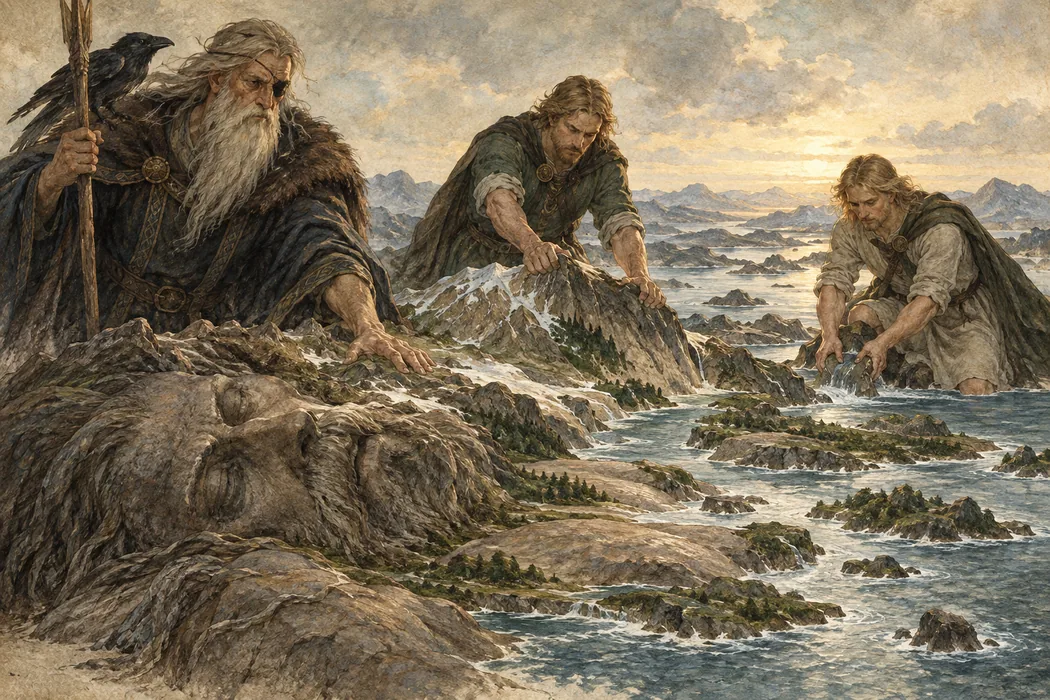
Snorri names three brothers who shape the world from Ymir. The poem Völuspá names Odin, Hœnir, and Lóðurr in the making of people; the relationship between these accounts is debated.
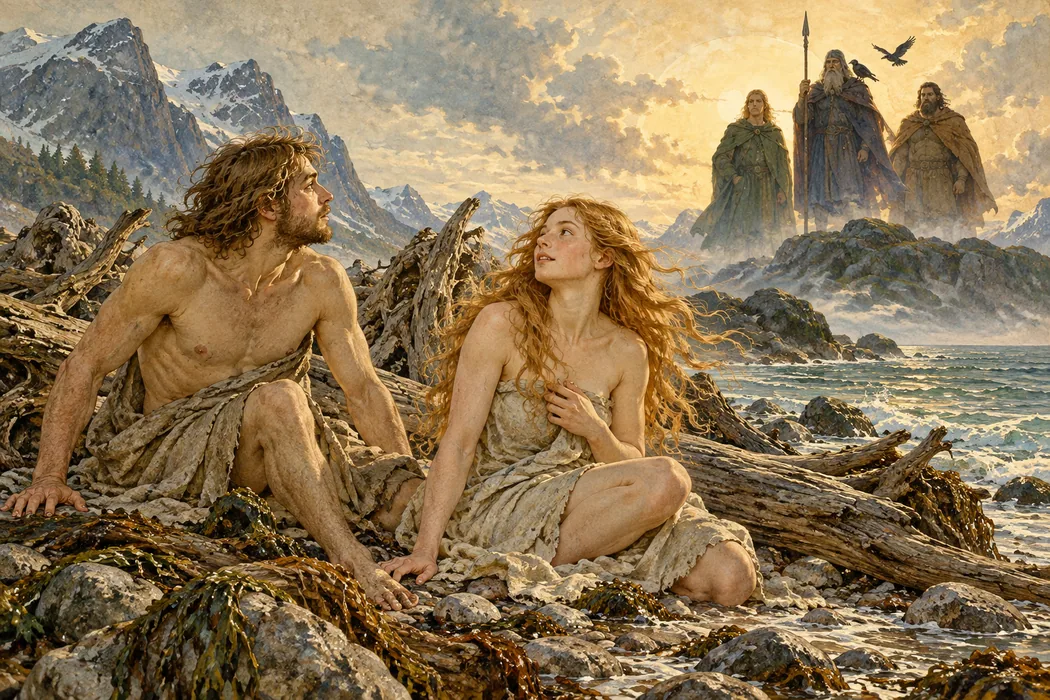
Völuspá tells of three gods giving life and human capacities to Ask and Embla. Snorri later describes them as trees found on a shore. The sources do not say every detail in the same way.
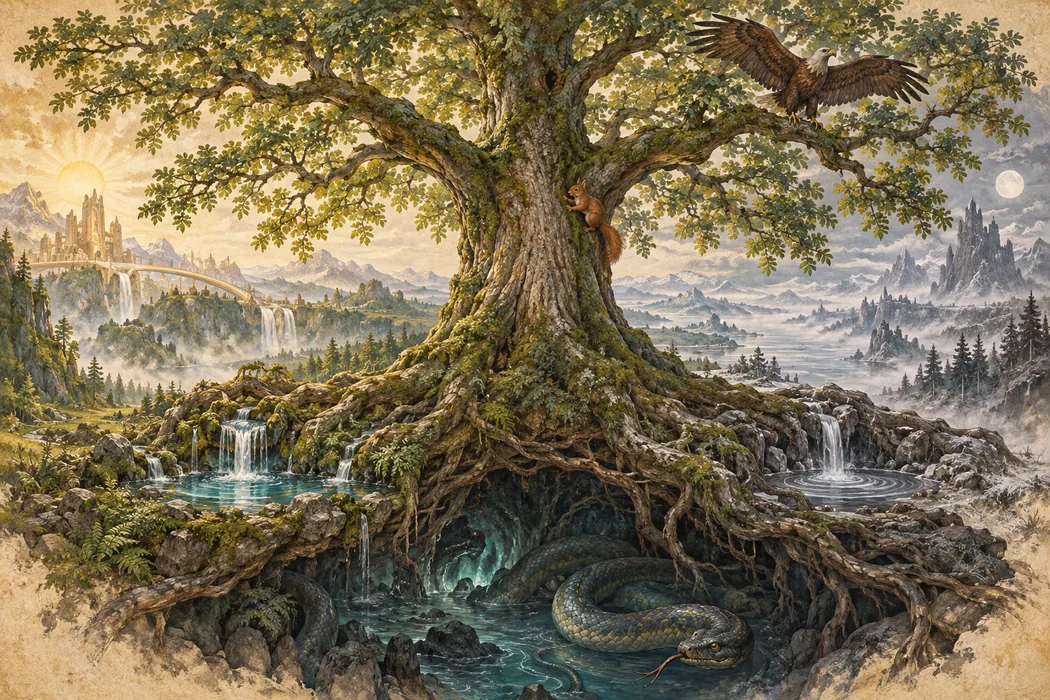
The world tree joins realms and shelters wells. Norns tend it, creatures inhabit it, and it suffers harm even as it stands. The sources offer several pictures, not one complete map of nine worlds.
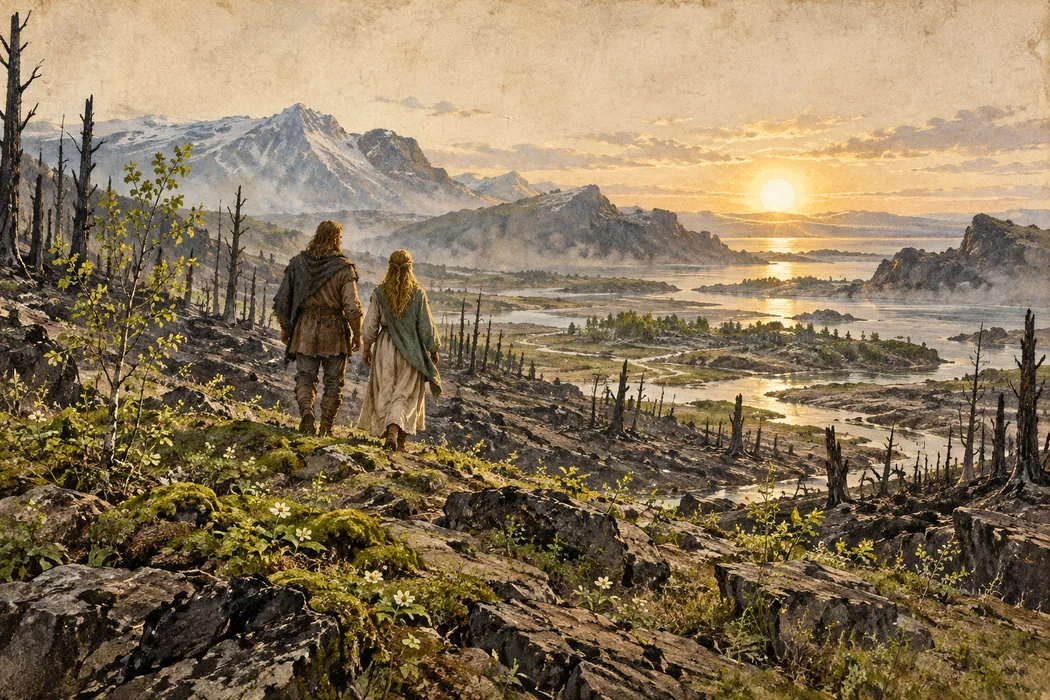
Völuspá foretells the deaths of gods, fire, and a world rising again. Surviving gods and a human pair, Líf and Lífþrasir, appear in accounts of what comes after.
The gods are relatives, rivals, hosts, mourners, and imperfect decision makers. Kinship and dwelling do not always settle a figure’s lineage.
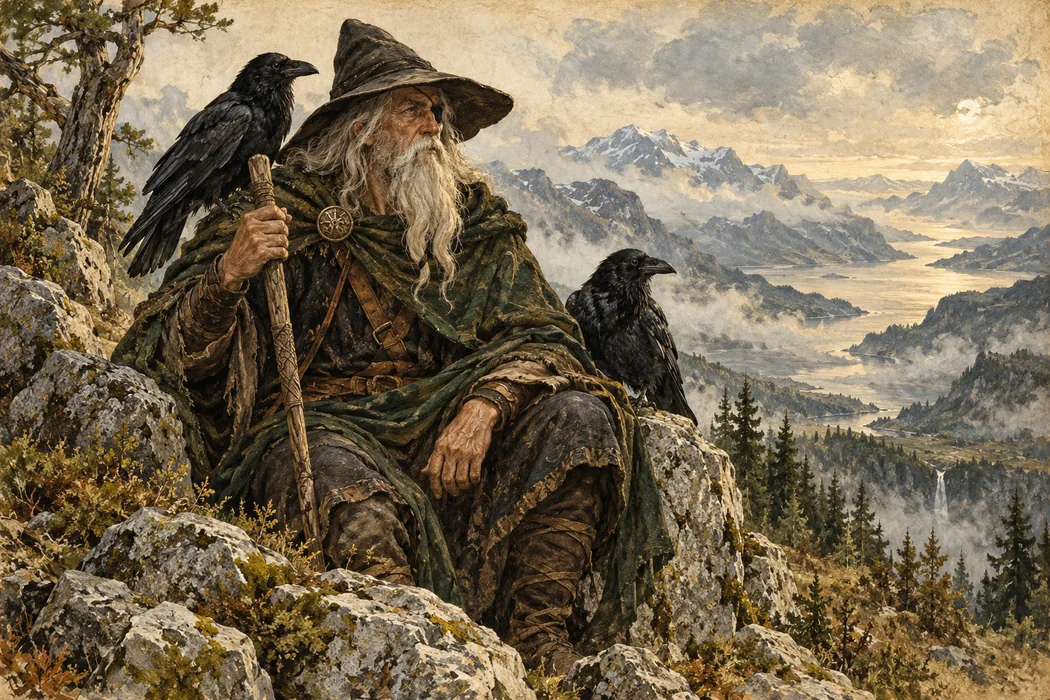
The one-eyed seeker trades for knowledge, wins the mead of poetry, and speaks the counsels of Hávamál. His choices can be costly and troubling.
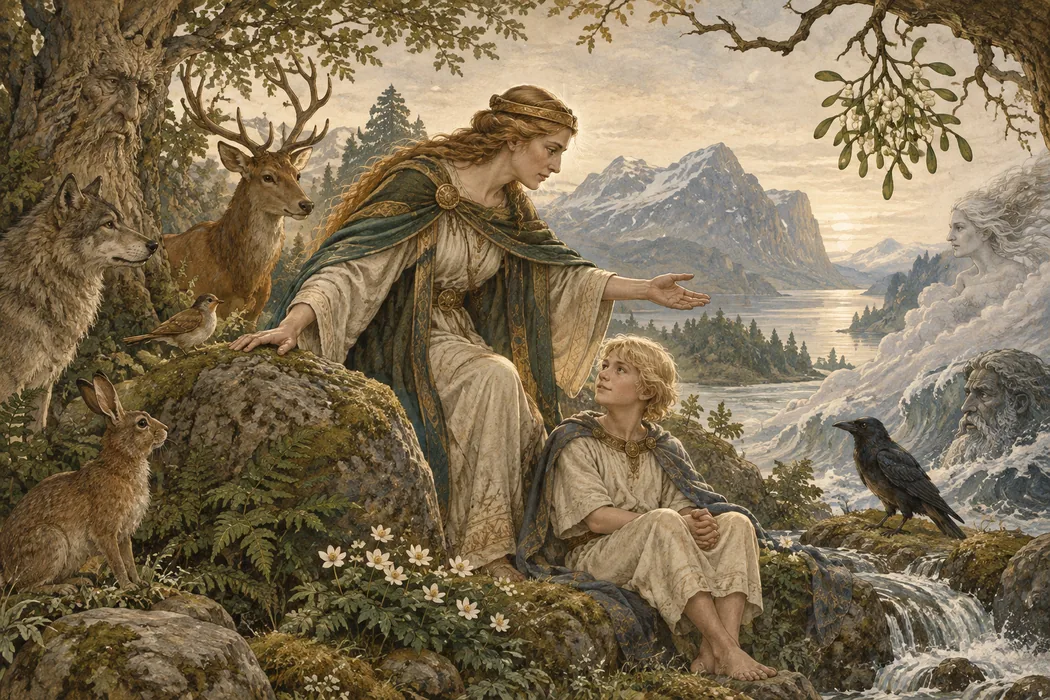
Odin’s wife and Baldr’s mother obtains promises from things not to harm her son, but mistletoe is left out. Her knowledge does not spare her grief.
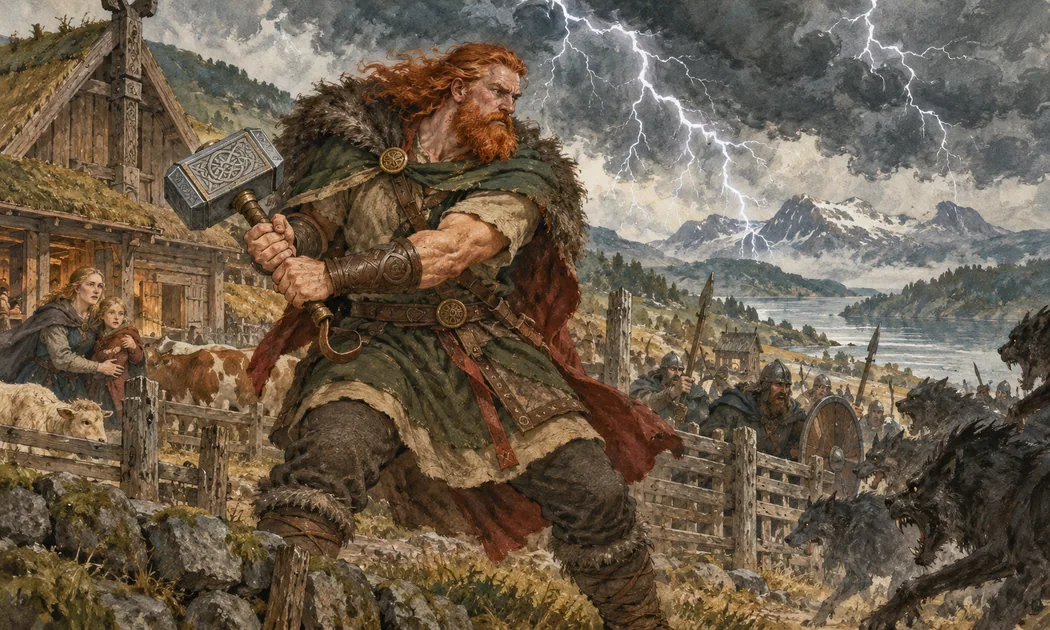
With Mjöllnir, Thor defends gods and humans, journeys among giants, and faces Jörmungandr. His strength is useful, but not every challenge yields to force.
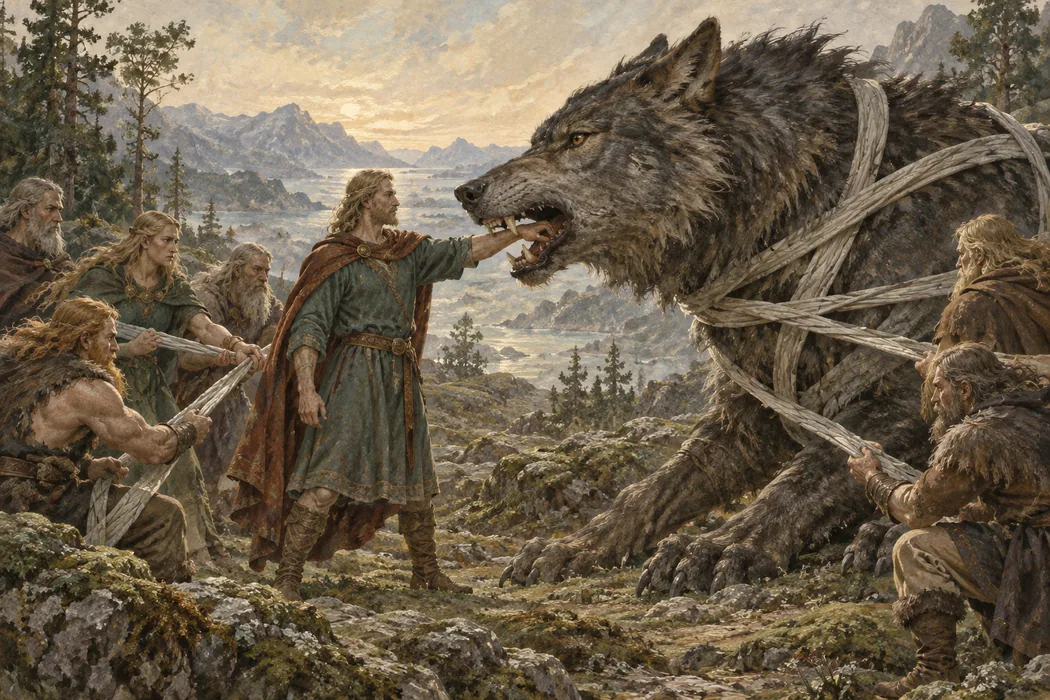
Týr puts his hand in Fenrir’s mouth as a pledge while the gods bind the wolf. He loses it when they break faith. Courage and betrayal sit together in this story.
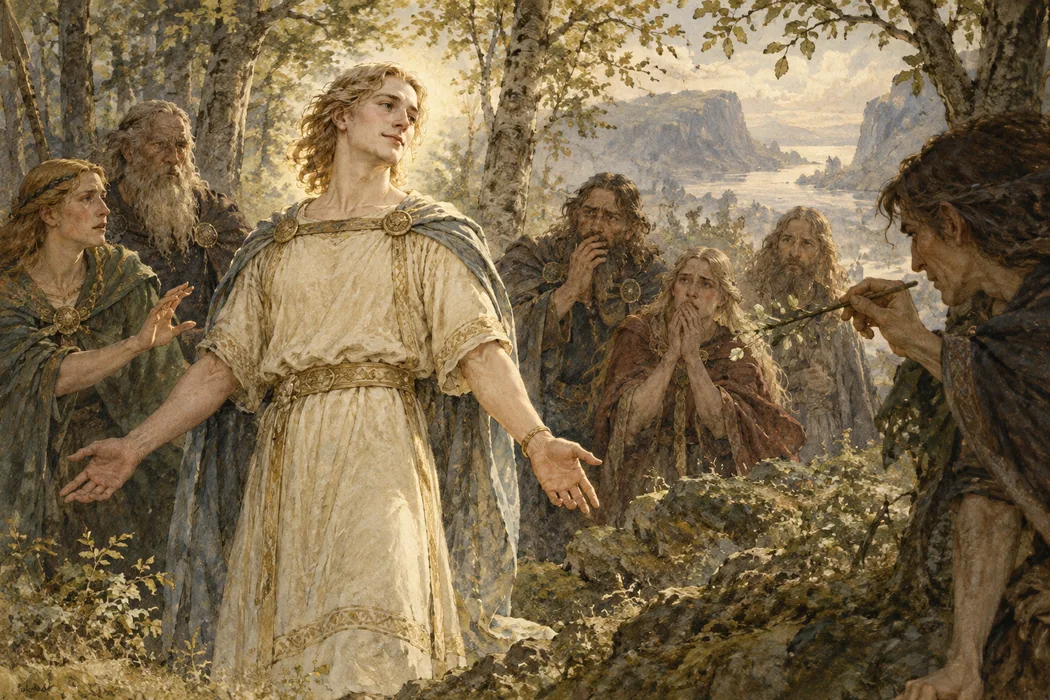
Baldr’s death through a mistletoe dart is a turning point in the myths. The gods cannot easily undo harm once done.
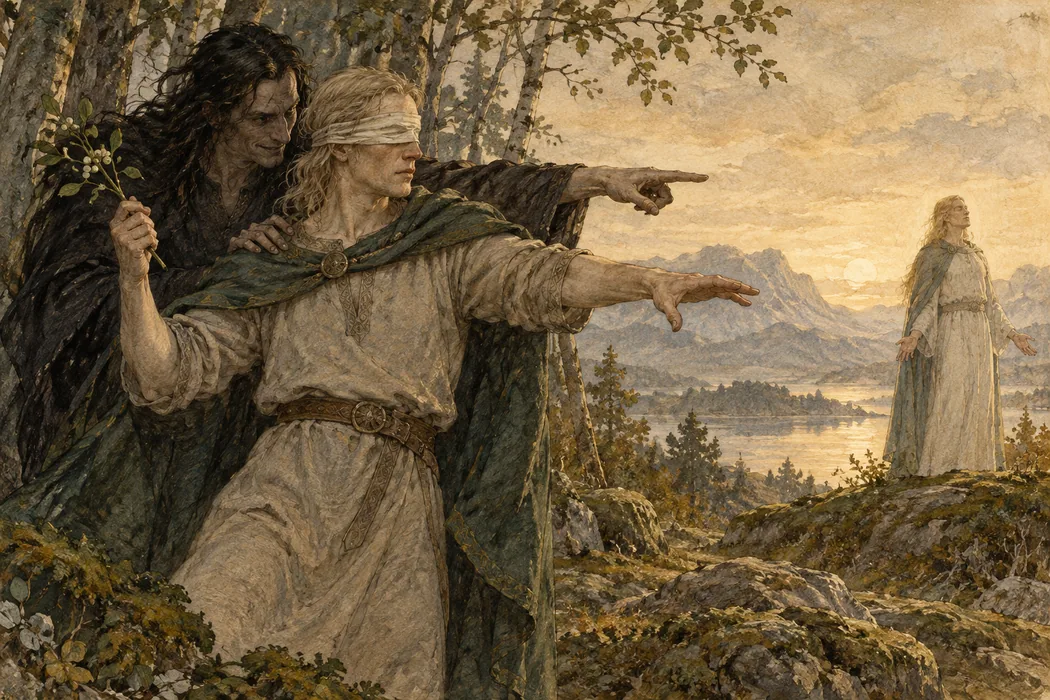
In Snorri’s account, Loki guides Höðr’s hand in the killing of Baldr. Other surviving accounts differ; simple blame misses the difficulty of the tale.
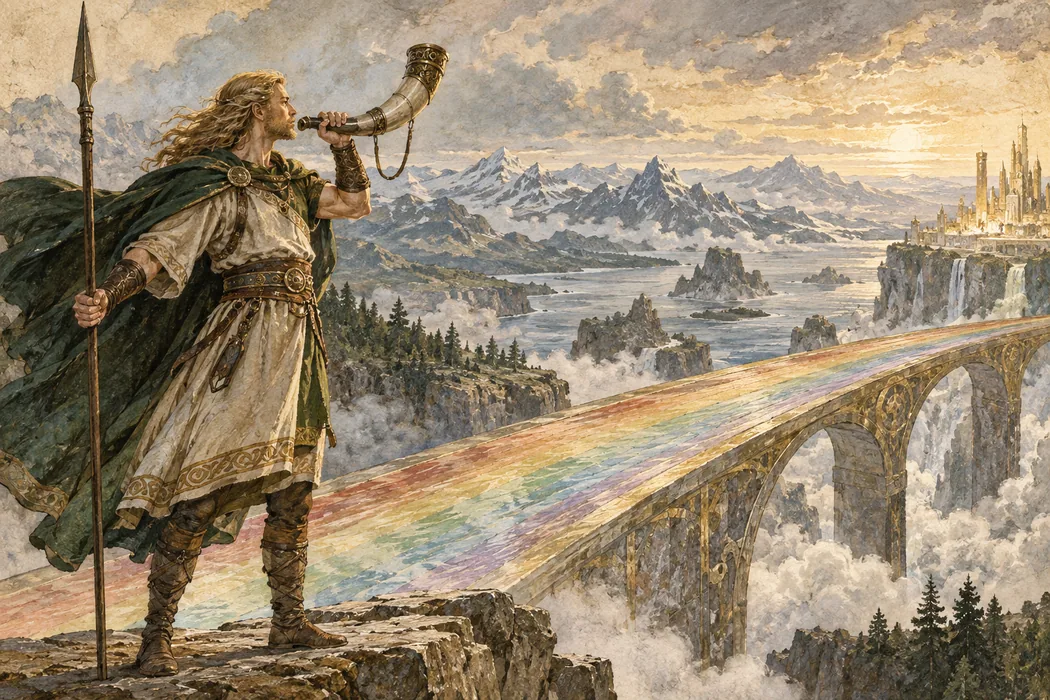
Heimdallr guards Bifröst and sounds Gjallarhorn at Ragnarök. His alertness makes him a guardian at a boundary.
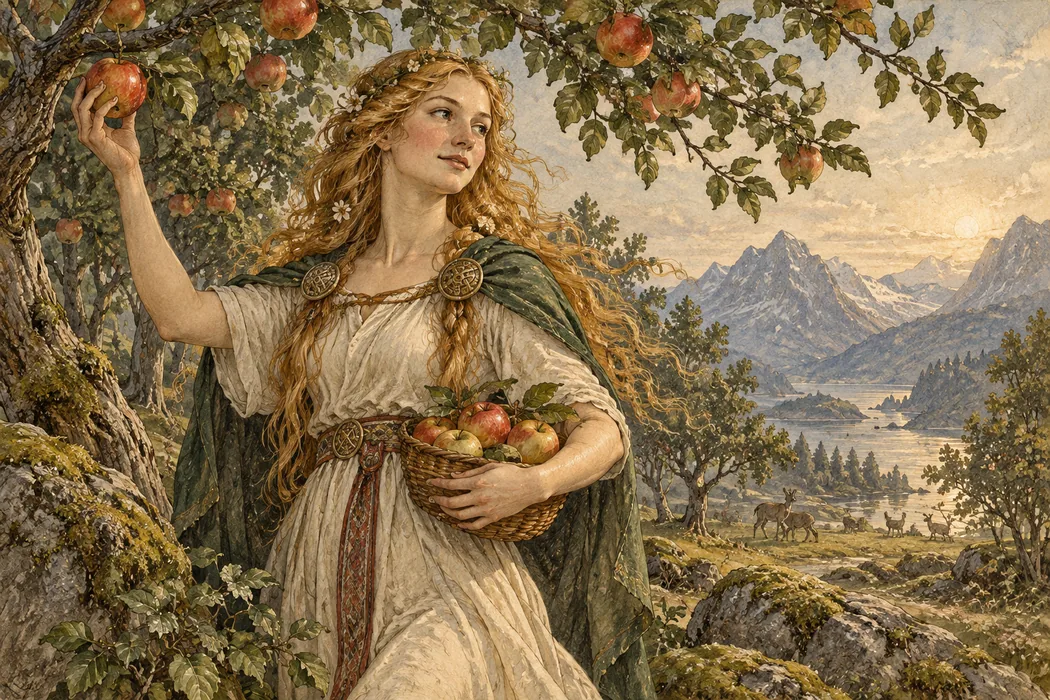
Iðunn holds apples that restore the gods’ youth. Her abduction puts their vitality at risk until she is brought home.
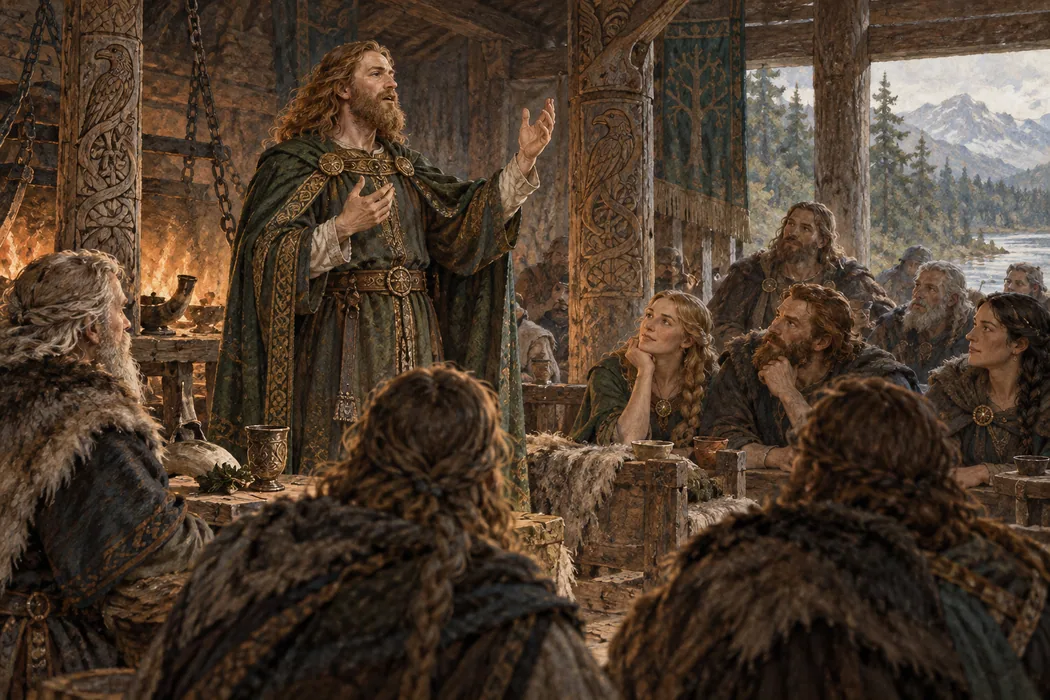
Snorri describes Bragi as famed for skill in poetry and speech; the poetic tradition also knows historical skalds named Bragi.
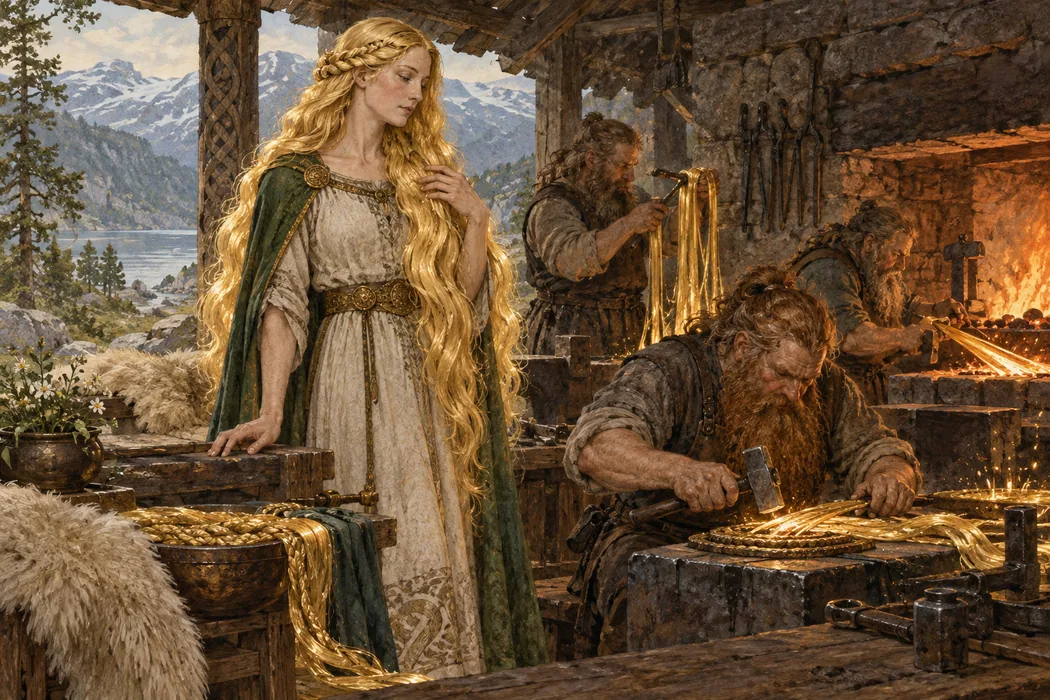
Known for her golden hair, cut by Loki and replaced through dwarven craft. Few independent stories about her survive.
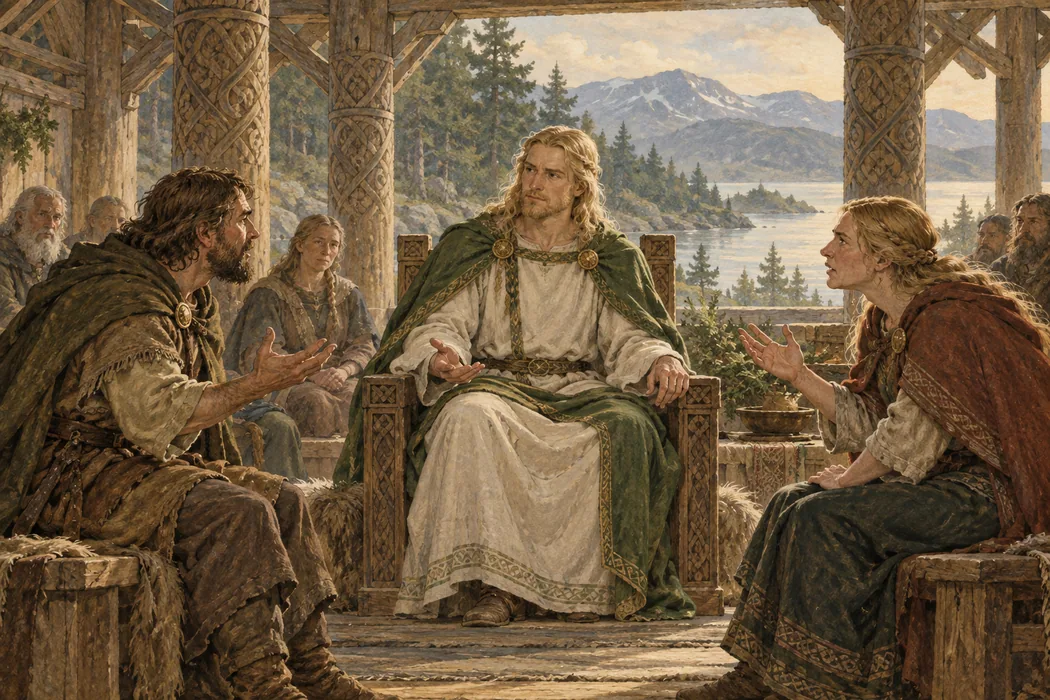
Baldr and Nanna’s son is associated with a hall where disputes are settled in Snorri’s description. Evidence for independent worship is limited.
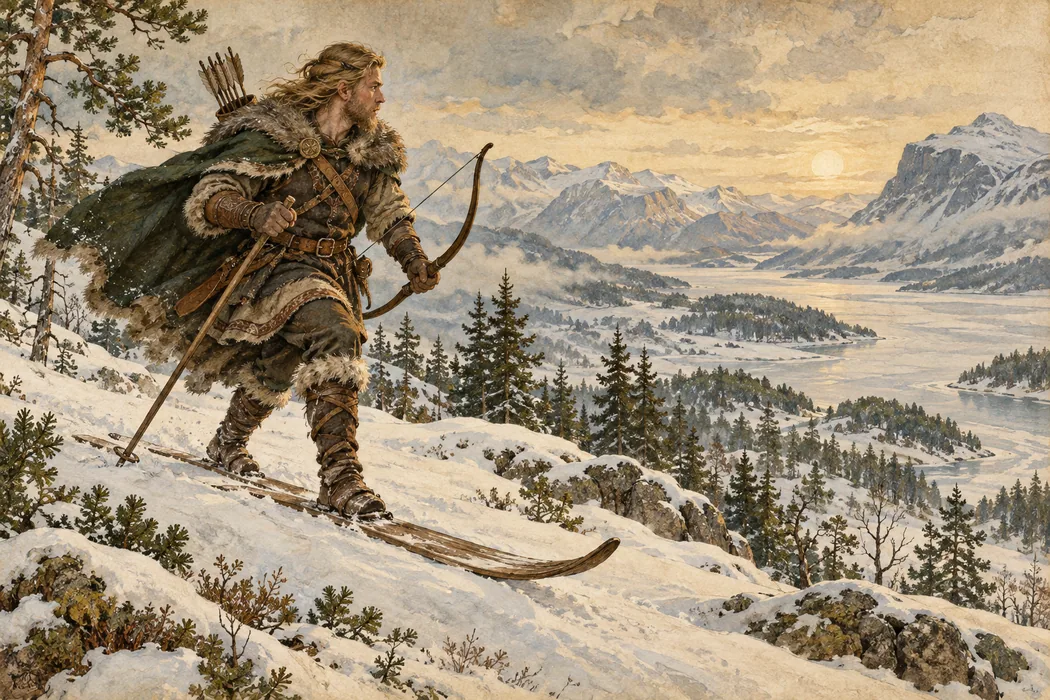
Poems and place names preserve Ullr; Snorri calls him skilled with bow and skis. Many details of his worship and myths remain unknown.
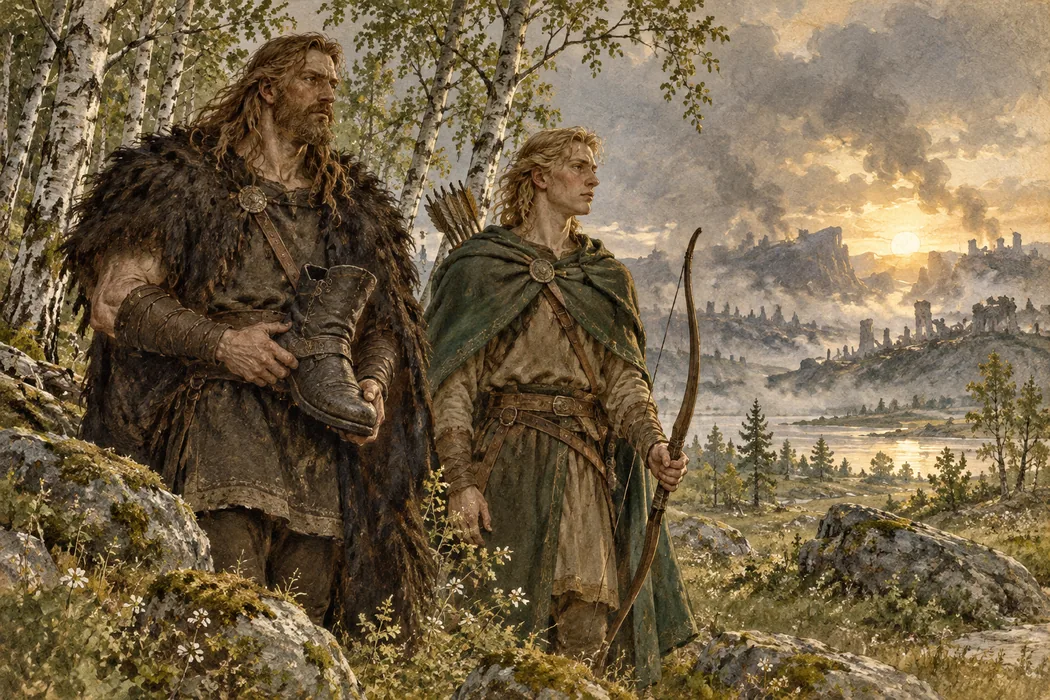
Víðarr avenges Odin at Ragnarök; Váli avenges Baldr. Both are named among those who remain afterward. Their acts invite hard questions about revenge.
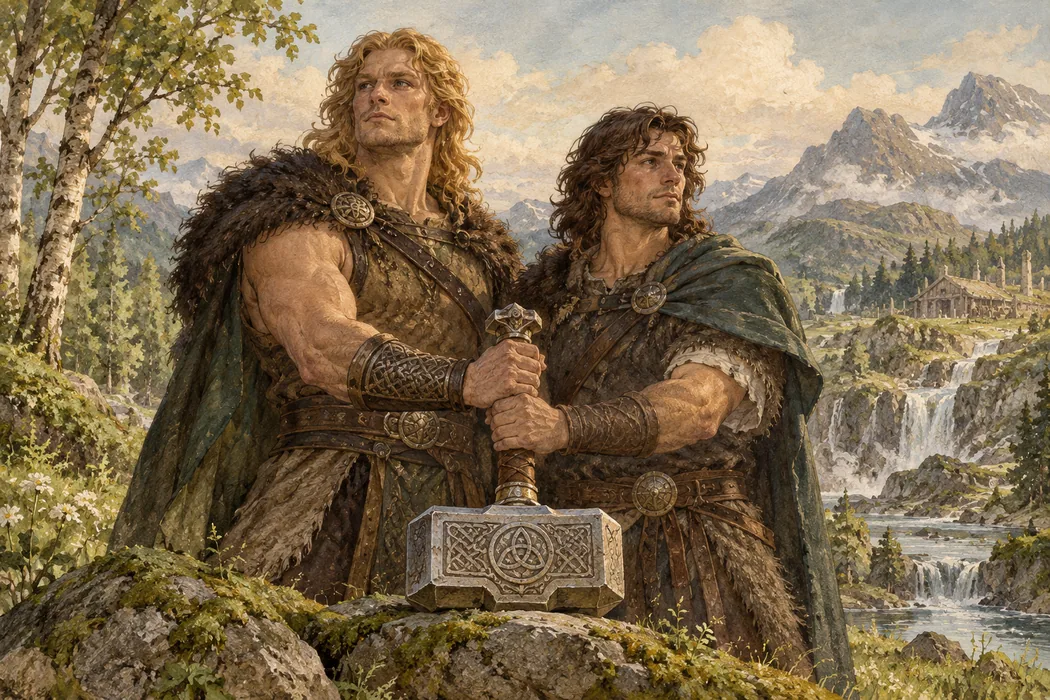
They survive Ragnarök and inherit Mjöllnir in Snorri’s account. Their names are commonly linked with strength and courage or fury.
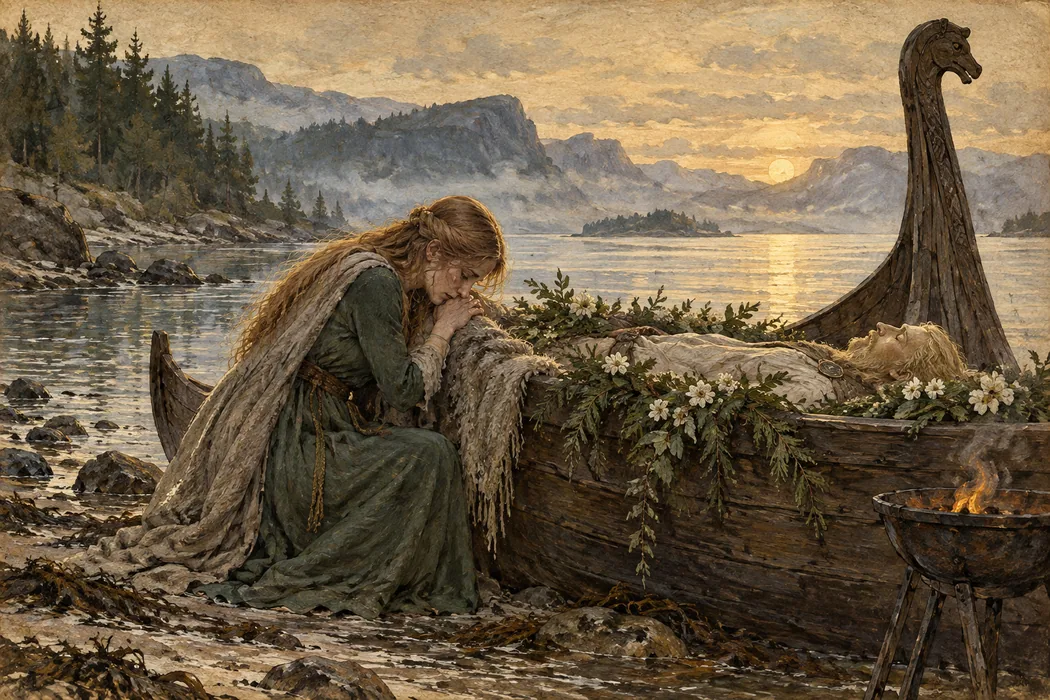
Snorri recounts her death in grief after Baldr’s and her journey with him to Hel. Her surviving story is bound to loss.
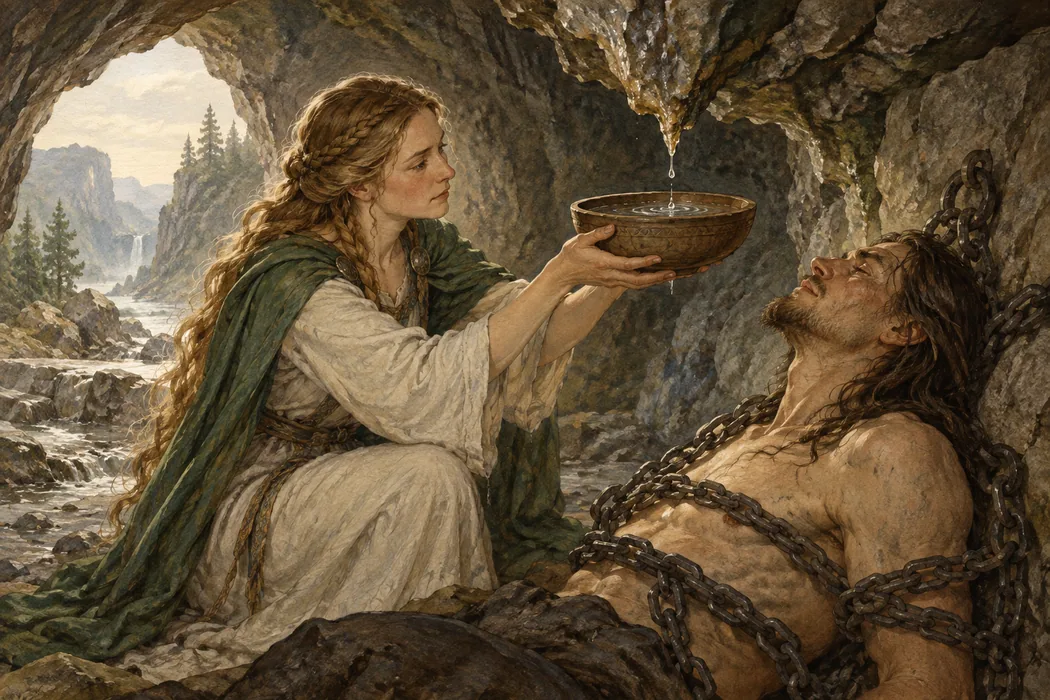
In the binding of Loki, Sigyn holds a bowl to catch venom falling on him. Her brief scene carries endurance without explaining everything about her life.
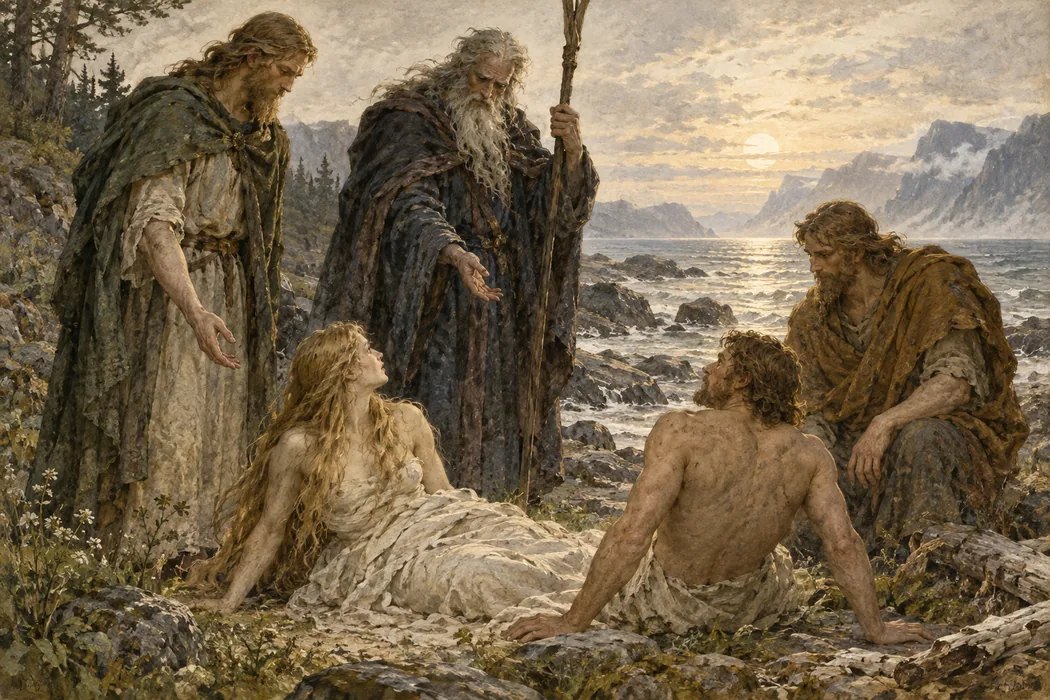
Völuspá names them alongside Odin at the creation of Ask and Embla. Hœnir appears elsewhere, while Lóðurr’s identity remains disputed; equating either with another god is interpretation.
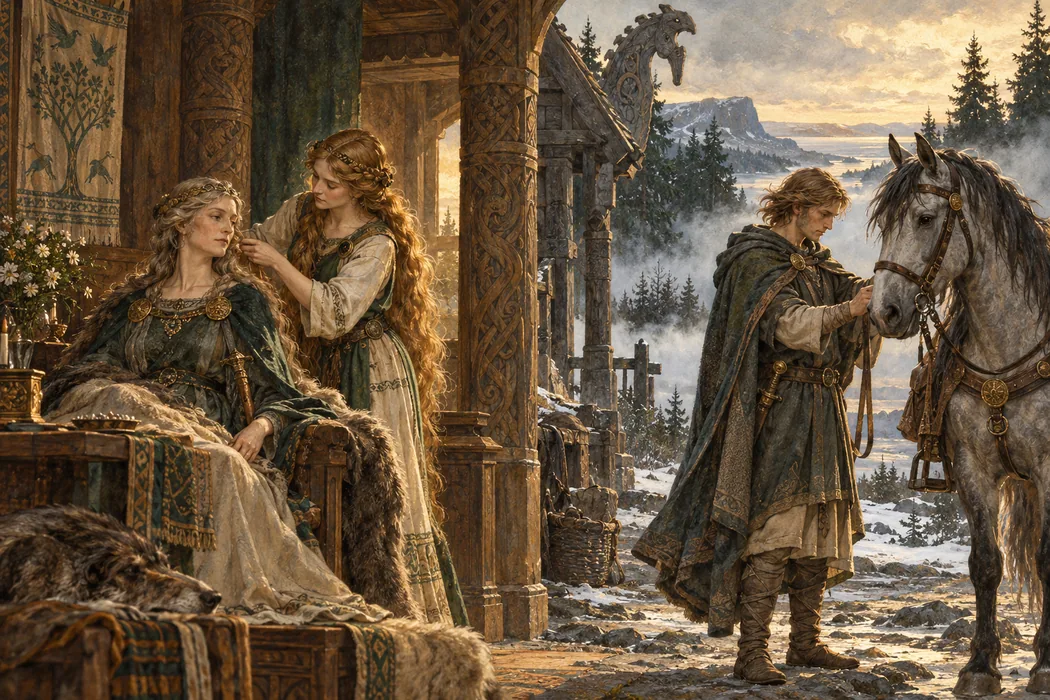
Snorri describes Fulla as close to Frigg and Hermóðr as the rider sent to seek Baldr’s return from Hel. Their surviving roles are specific rather than a complete account of their lives.
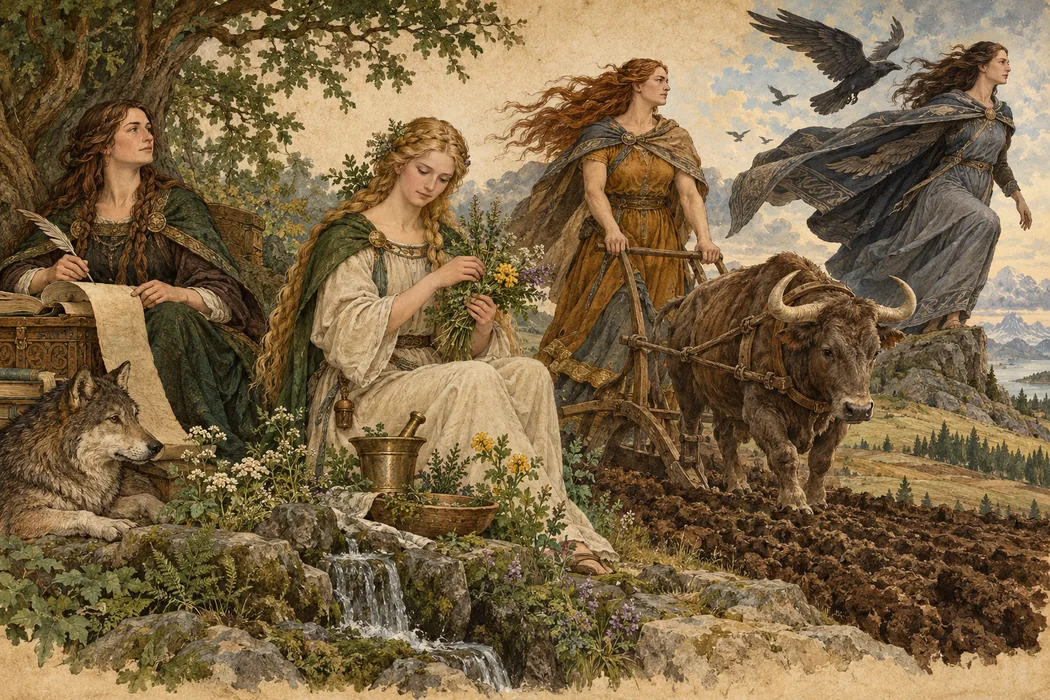
Snorri’s goddess list names Sága, Eir, Gefjon, and Gná; details vary. Eir is linked with healing there, Gná with errands, and Gefjon has a separate Zealand story.
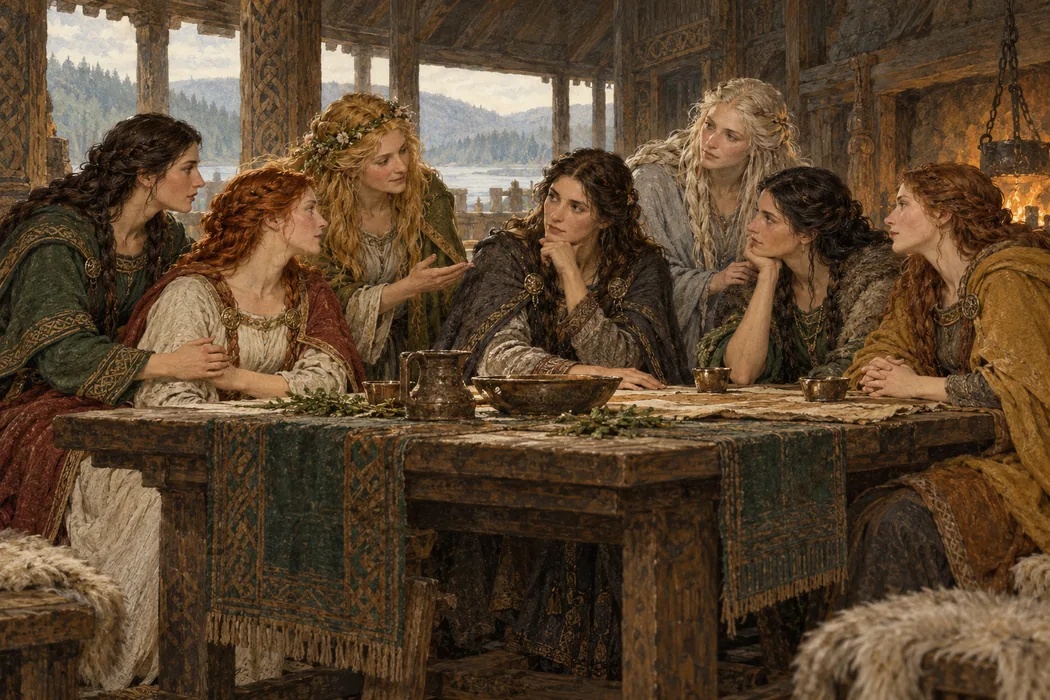
These names are presented with associations including affection, unions, vows, awareness, defense, protection, and wisdom. Independent mythic stories for many are scarce.
The texts name a second divine grouping, but membership and family ties can vary between accounts.
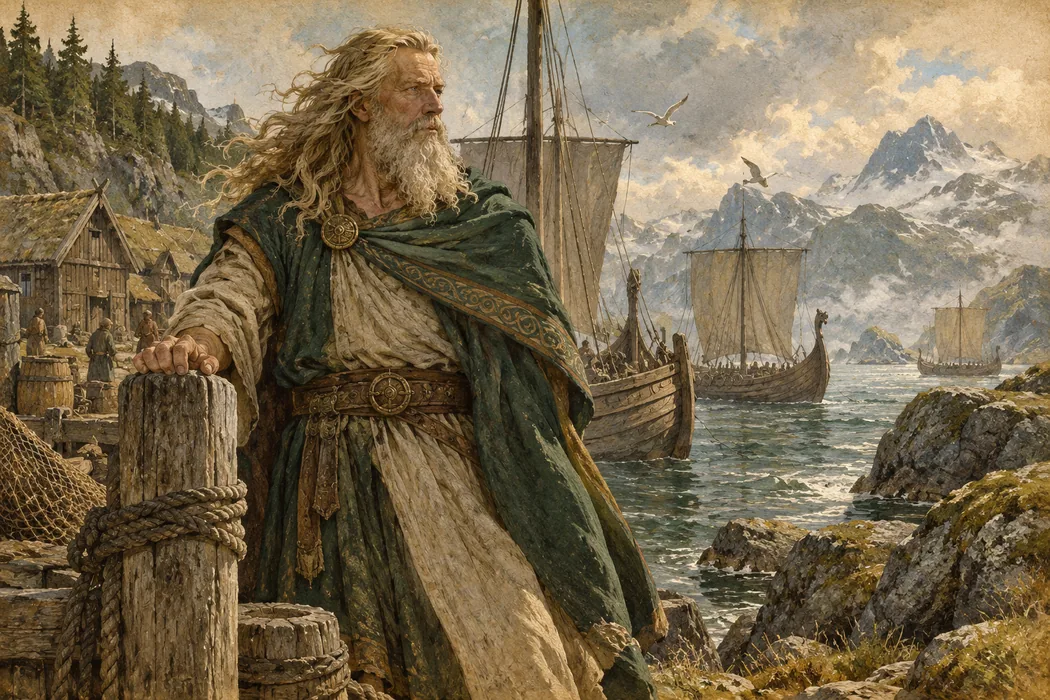
A Vanir hostage living among the Æsir and father of Freyr and Freyja. His marriage to Skaði fails because neither can bear the other’s home.
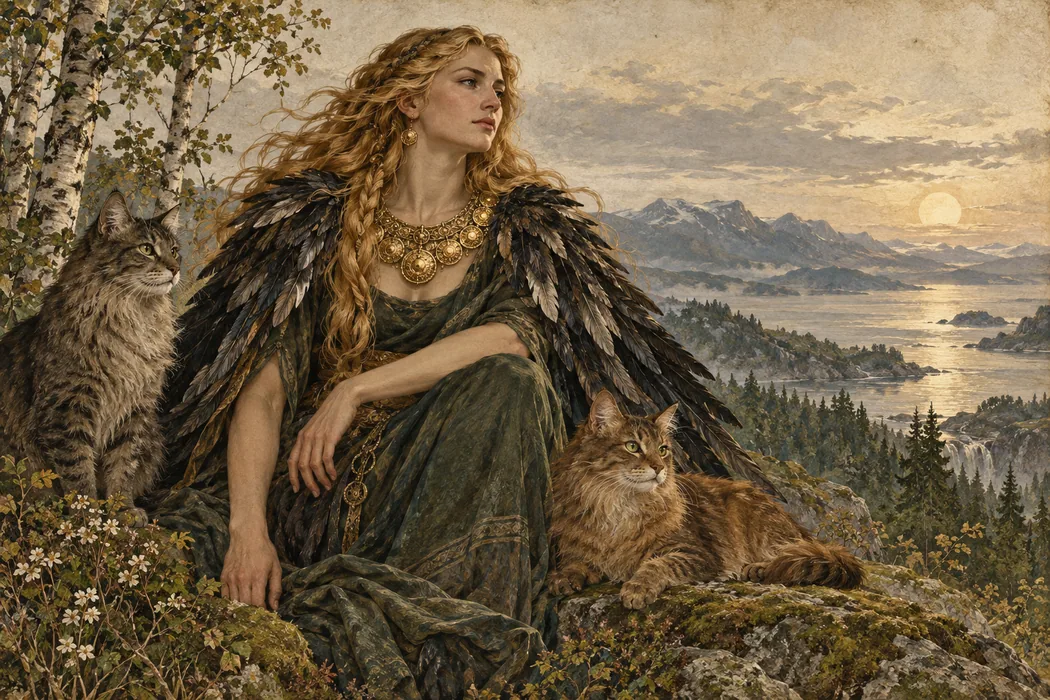
Freyja is linked to Brísingamen, a feather cloak, and Fólkvangr, where she receives a share of the slain. Details of her practice differ among sources.
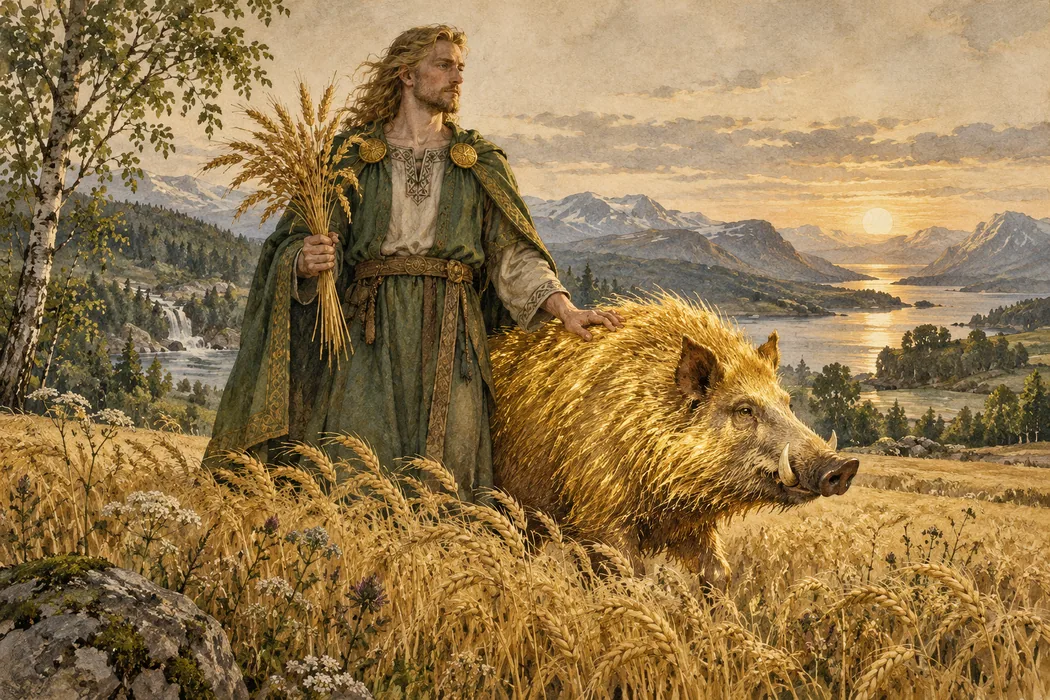
Freyr is associated with fertility and good seasons. In Skírnismál, his longing for Gerðr leads his messenger to threats and coercion; that part deserves honest discussion.
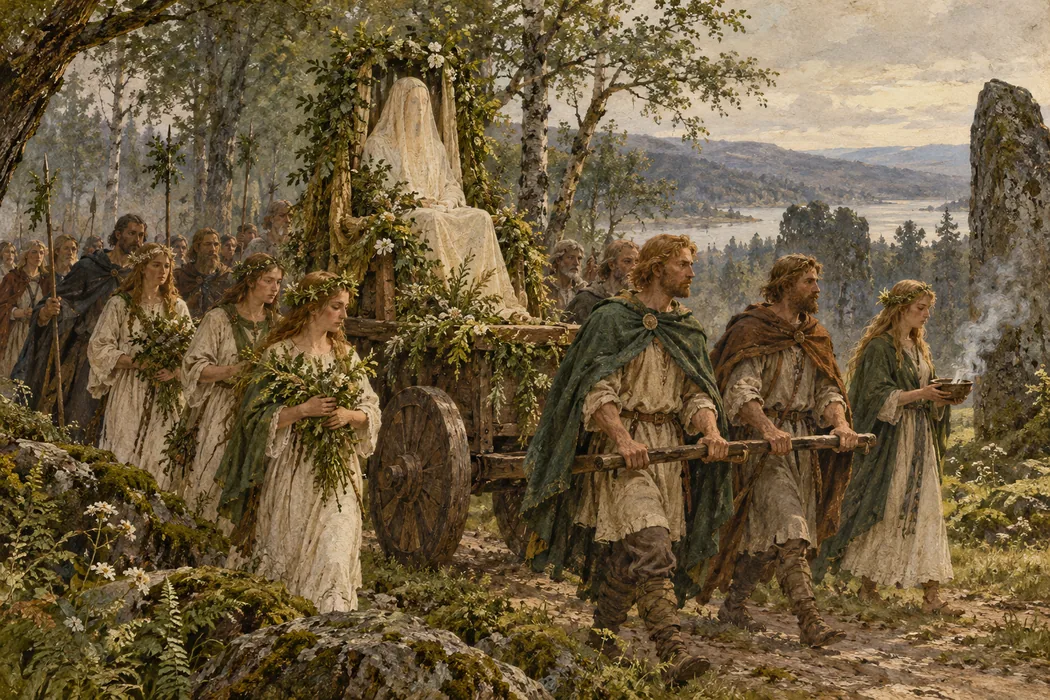
Tacitus reports a goddess Nerthus in an early account of Germanic peoples. A linguistic connection to Njörðr is often proposed, but their identity and cult cannot be simply merged.
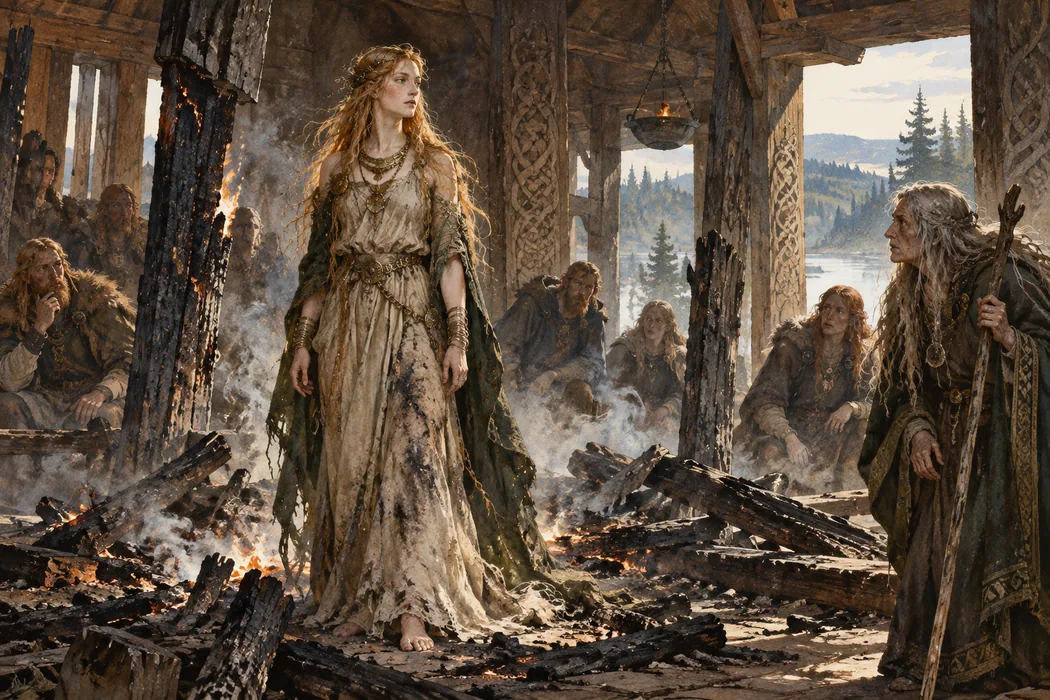
Völuspá names a woman burned and reborn, and later speaks of Heiðr. Whether they are the same figure or linked to the Æsir–Vanir war remains debated.
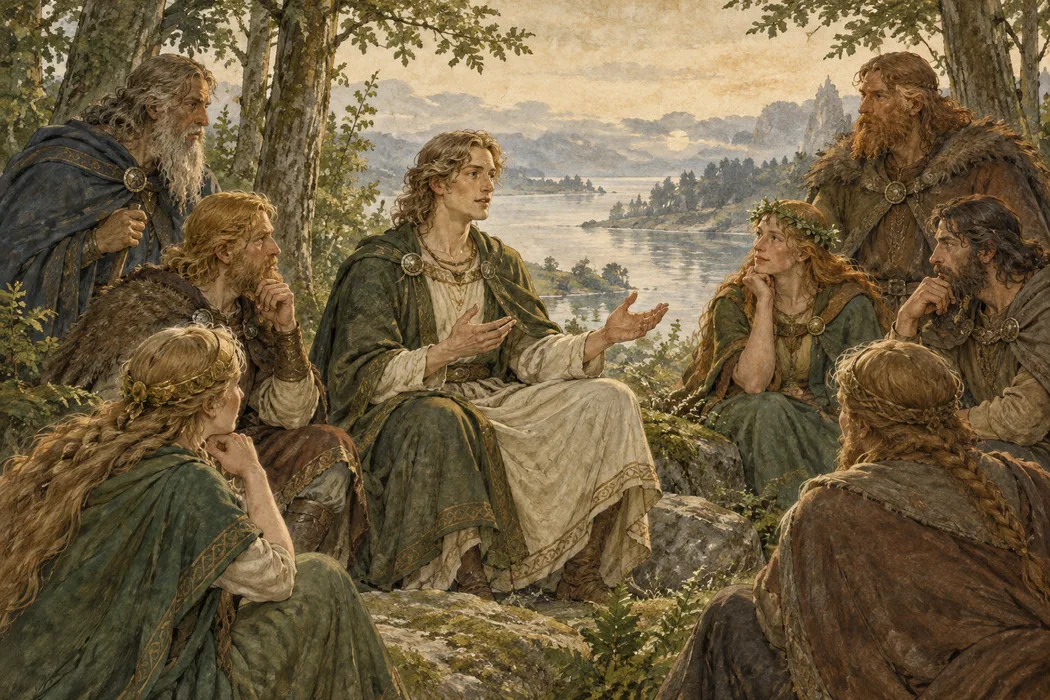
In Snorri’s account, Kvasir is formed after peace between divine groups, then killed by dwarves; his blood becomes the mead of poetry.
Jötnar are not a single kind of monster. They can be ancestors, rivals, partners, hosts, and holders of knowledge.
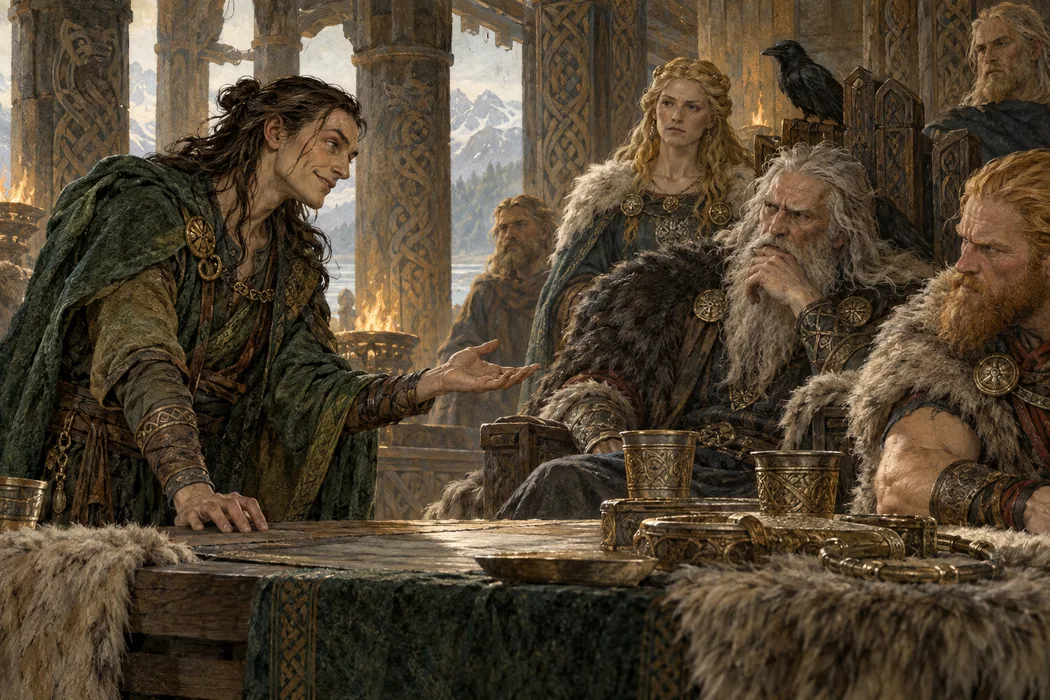
Loki lives among the gods, solves some crises he helps cause, and is bound after Baldr’s death. His parentage is jötunn; a tidy classification misses his role.
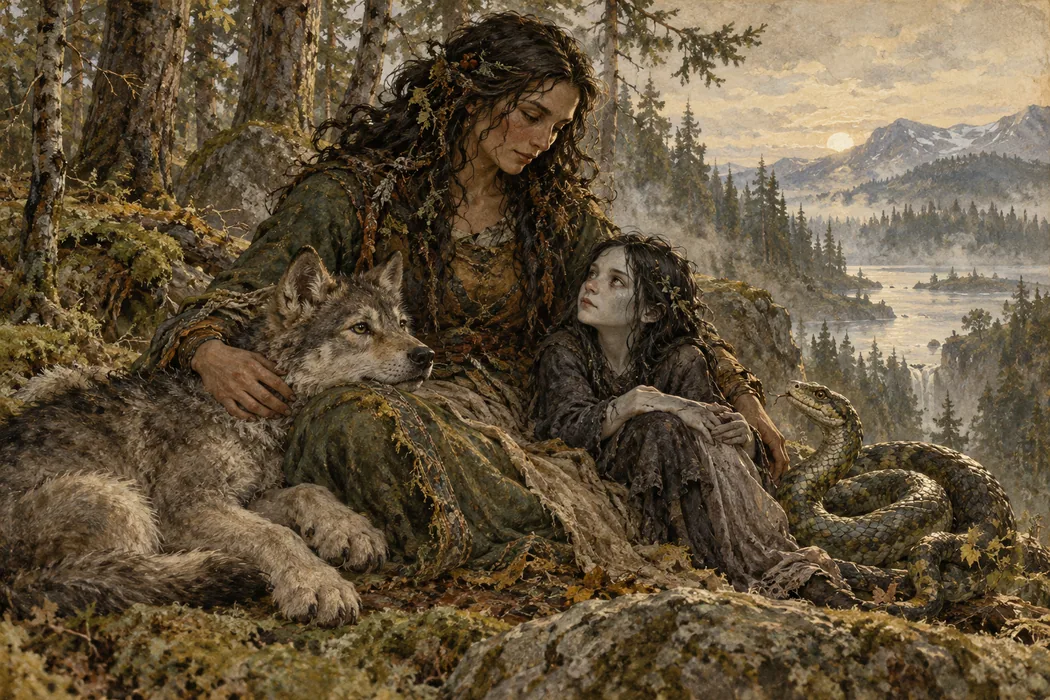
Snorri names the jötunn Angrboða as mother, with Loki, of Fenrir, Jörmungandr, and Hel. Little else about her is securely preserved.
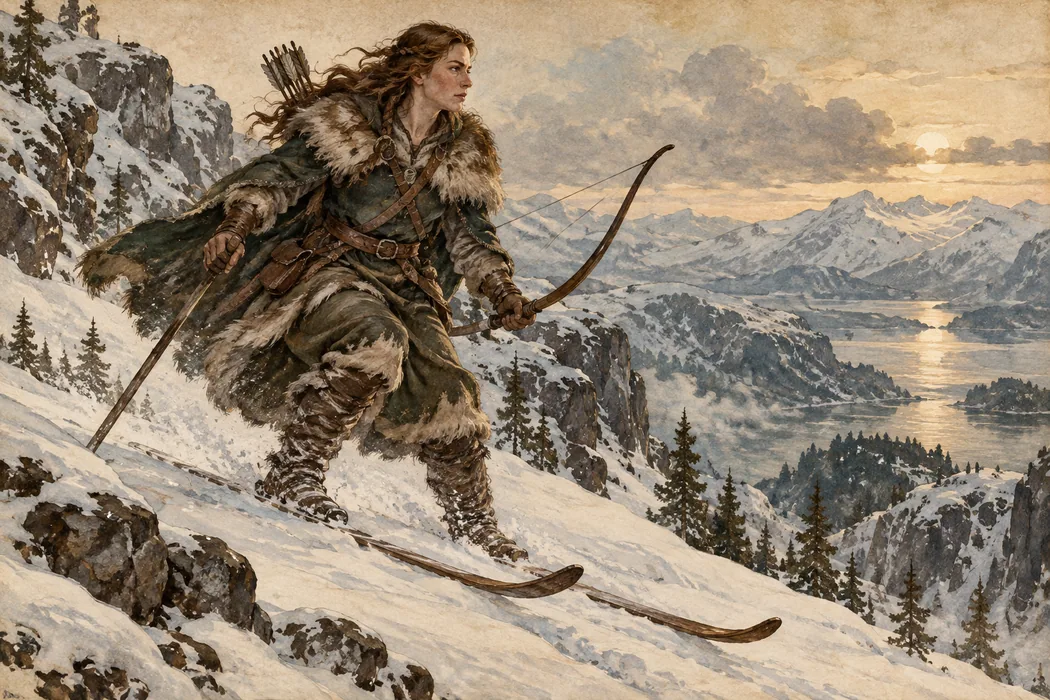
A jötunn who comes armed to seek redress for her father’s killing, marries Njörðr, and prefers mountains to the coast. She resists a simple god-versus-giant divide.
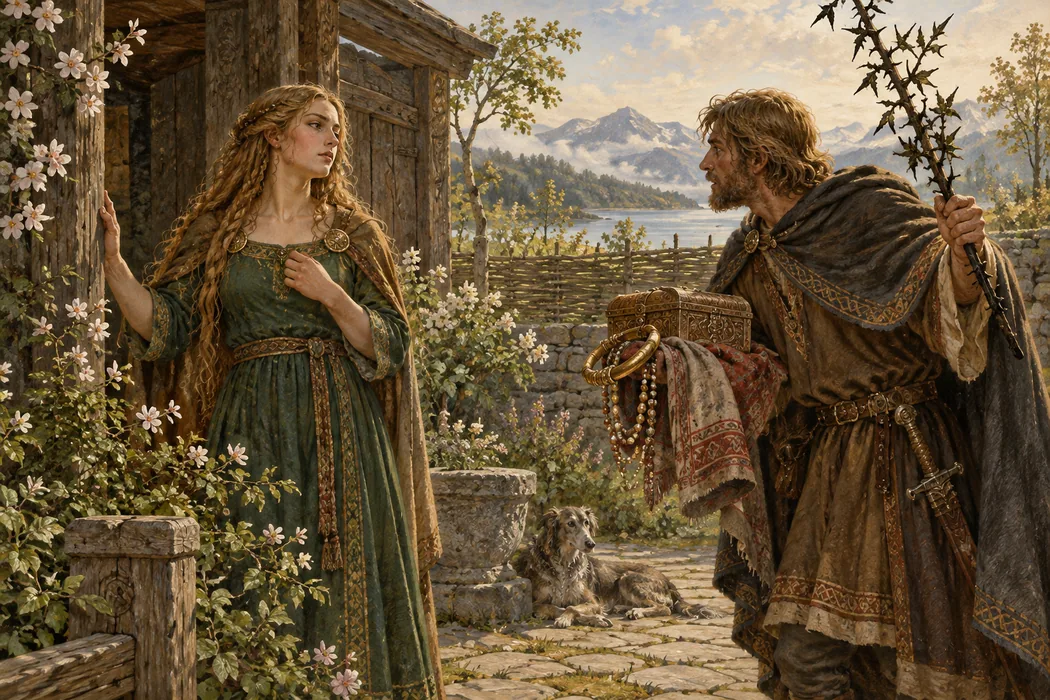
Freyr desires Gerðr; his messenger Skírnir uses gifts and threats to secure a meeting. Read her position in the story, not only Freyr’s wish.
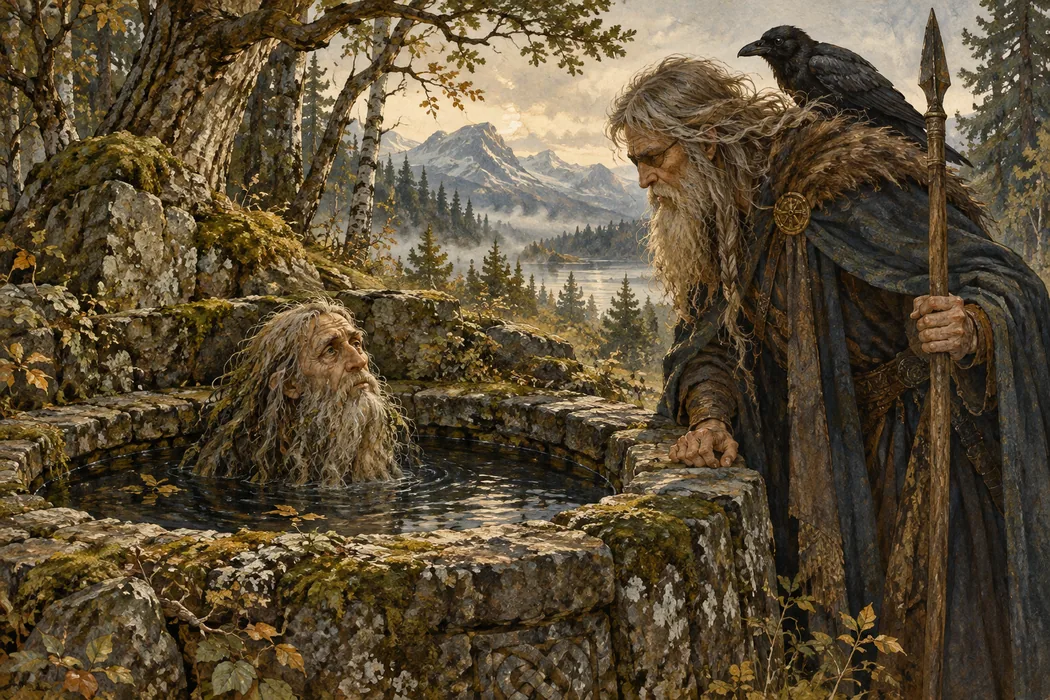
Odin gives an eye for a drink from Mímir’s well in Snorri’s account. Mímir is also associated with counsel and memory in other accounts.
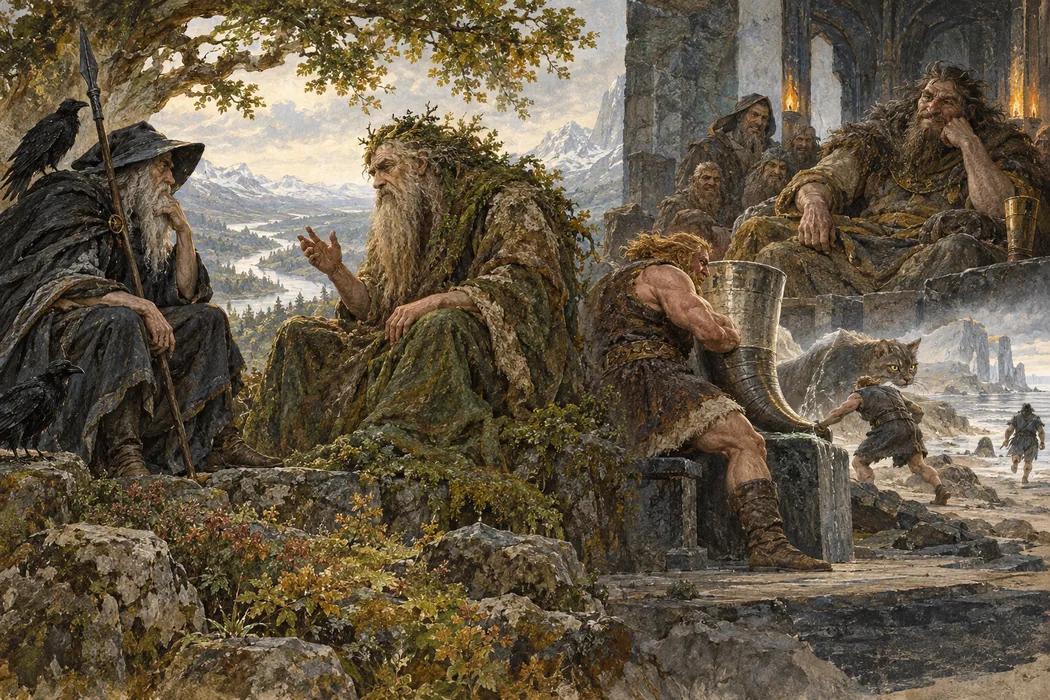
Odin questions the giant Vafþrúðnir; Thor’s party faces deceptive contests at Útgarða-Loki’s hall. These opponents reveal the gods’ limits.
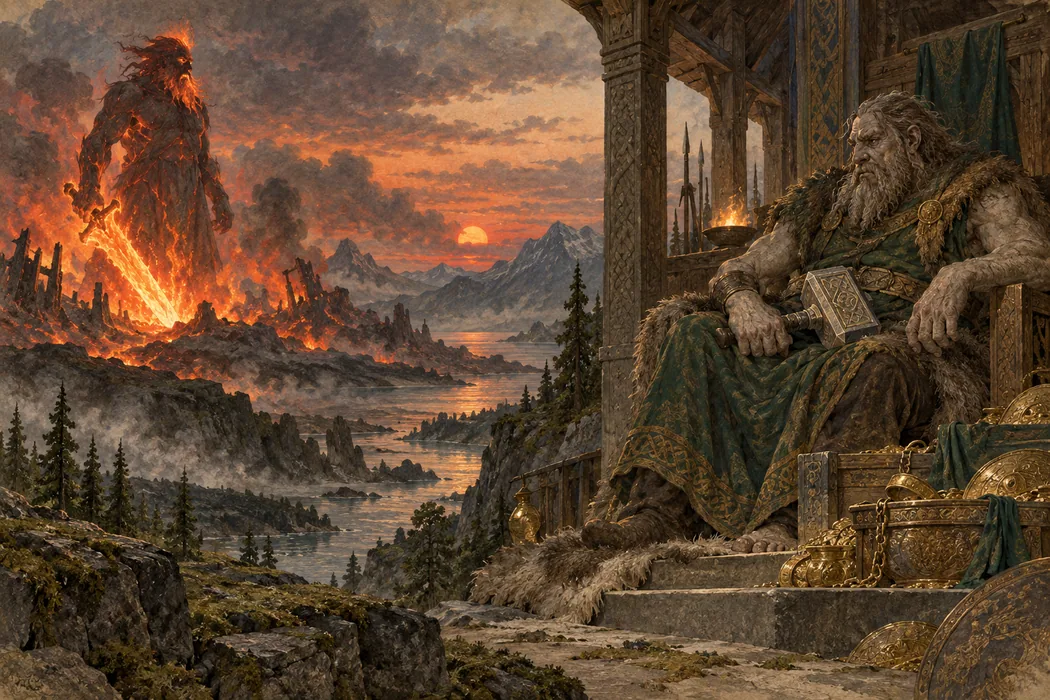
Surtr advances with fire at Ragnarök; the giant Þrymr steals Thor’s hammer and demands Freyja as his bride in Þrymskviða.
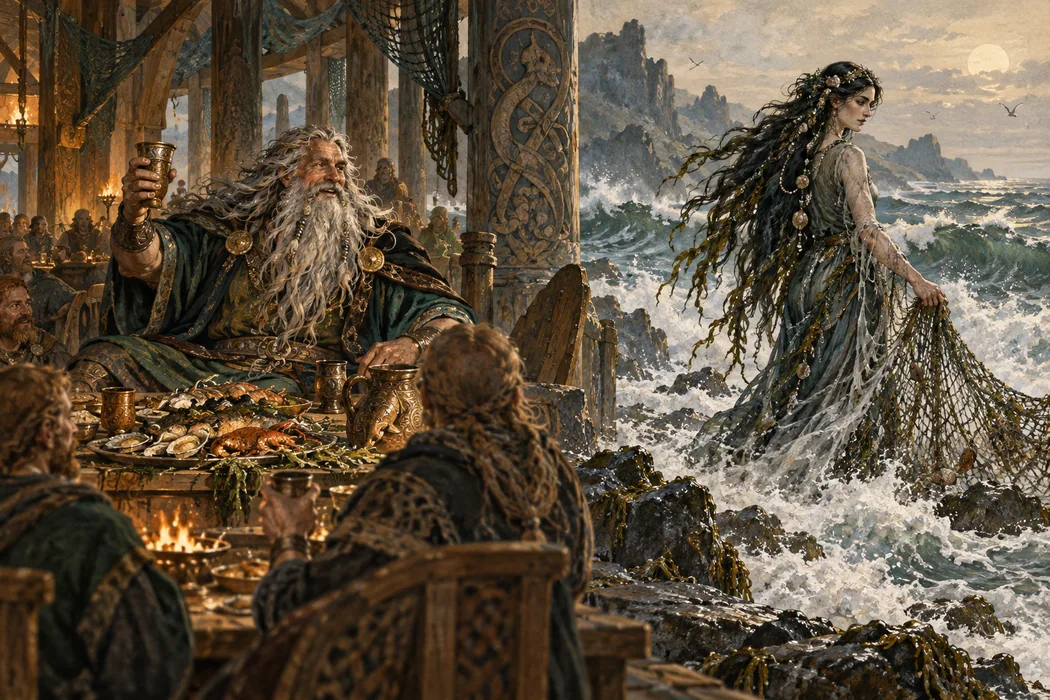
Ægir hosts a famous feast; Rán is associated with the sea’s taking of lives. Their figures hold both welcome and peril on the water.
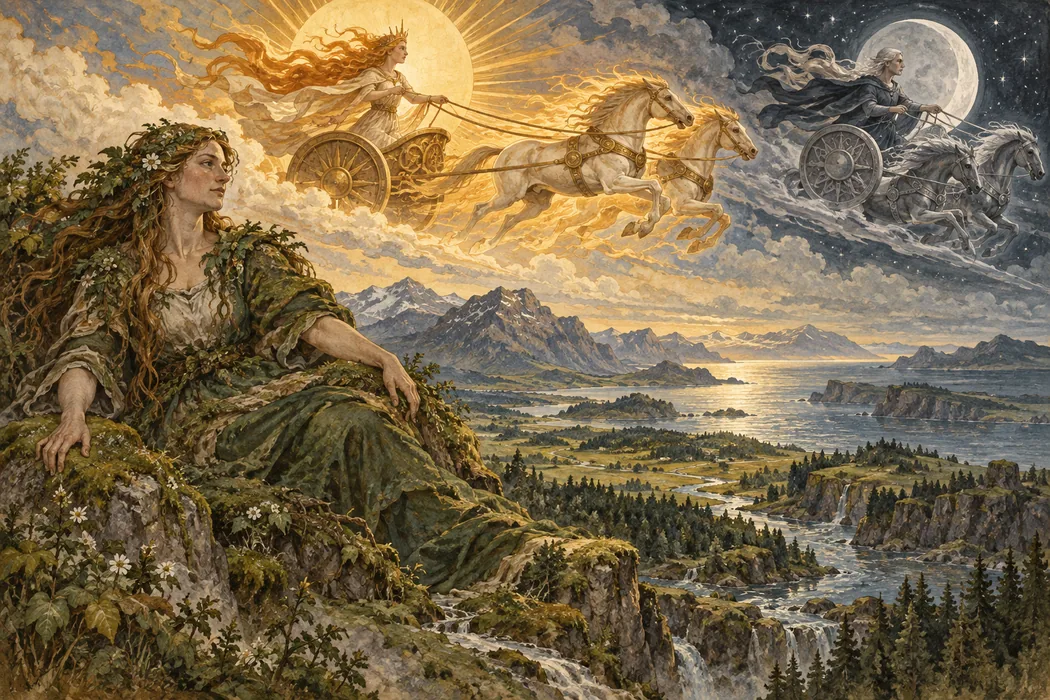
Jörð is named as Thor’s mother and the earth personified. Sól and Máni travel the sky in Snorri’s telling, pursued by wolves.
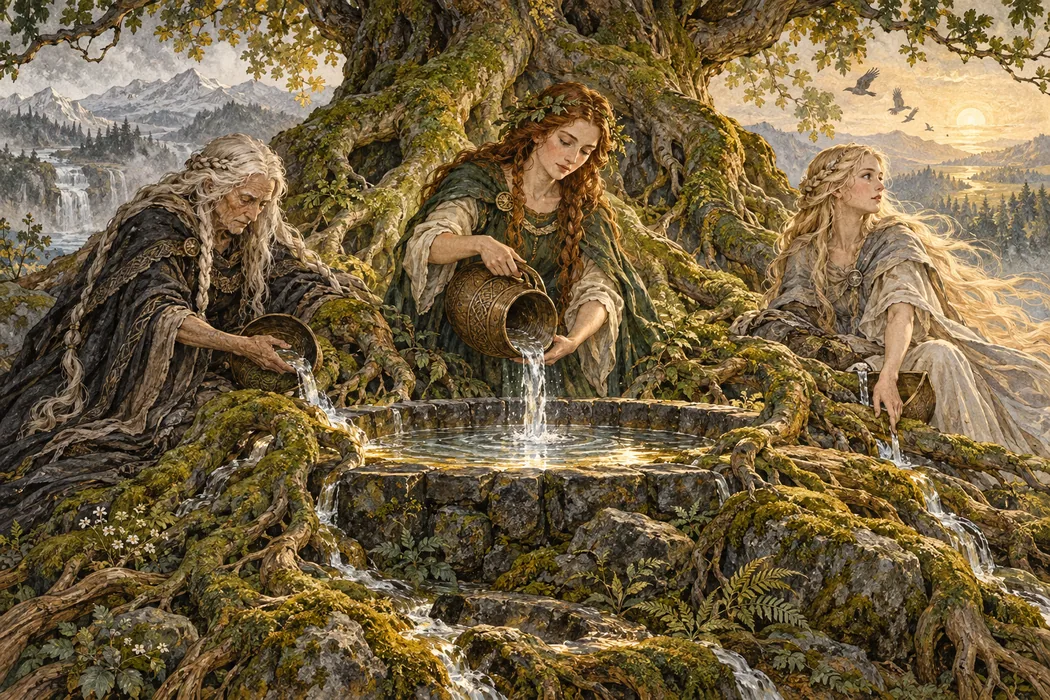
Völuspá names three norns beside Yggdrasill’s well; Snorri also speaks of other norns. Their work touches lives and the tree itself, though the texts do not give a single fixed doctrine of fate.
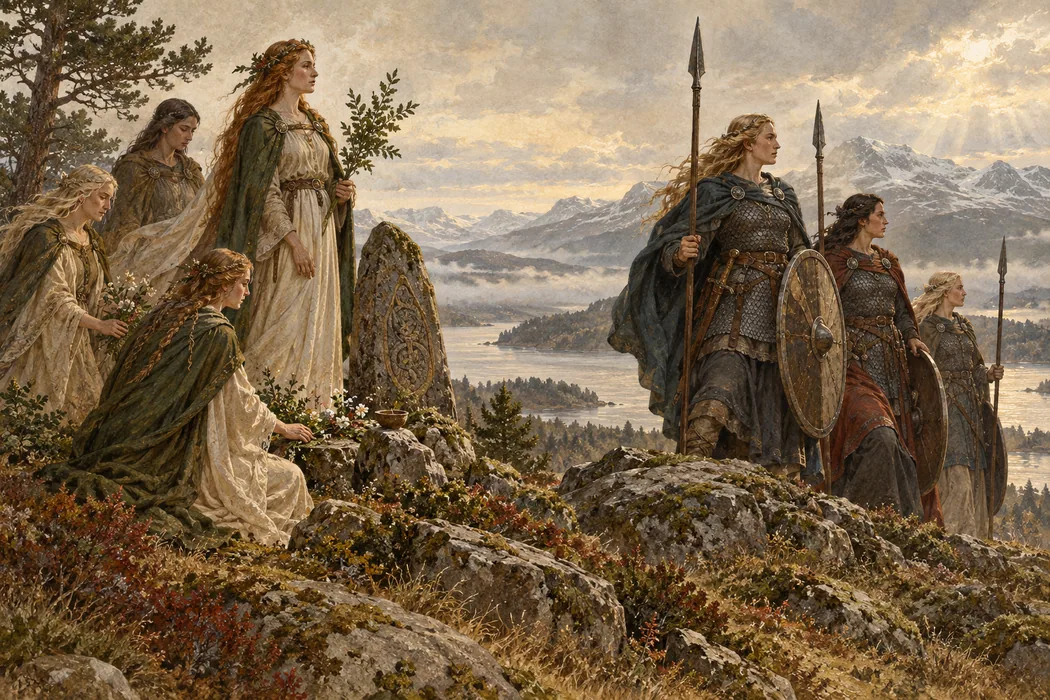
Dísir are a varied category of female beings; valkyries select the slain in battle traditions. Their identities and roles are not identical or uniform.
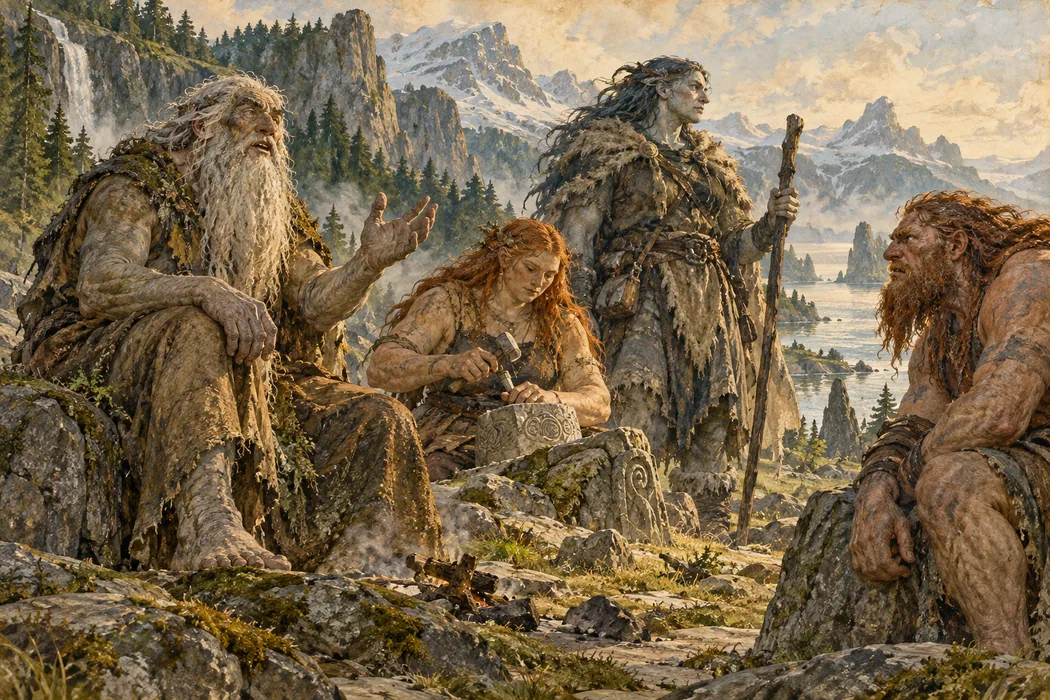
Jötnar include ancestors, wise rivals, spouses, and fierce opponents of gods. The word is often rendered giant, but size alone does not define them.
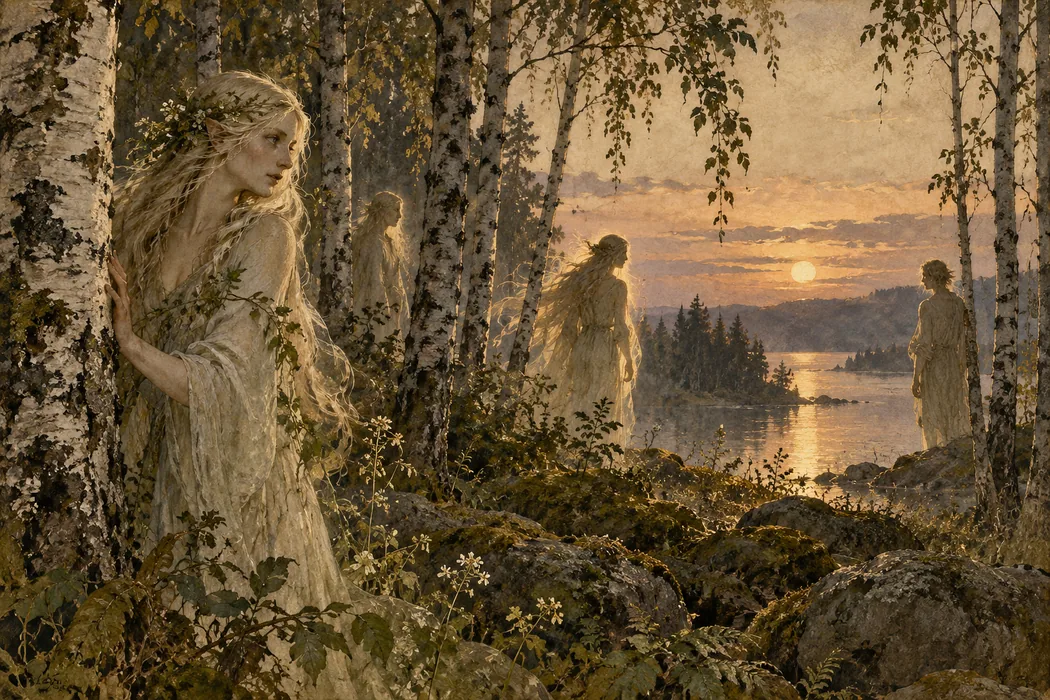
Elves appear in poetry and in Snorri’s light-elf and dark-elf distinctions. The surviving texts leave their nature and worship less clear than modern fantasy often suggests.
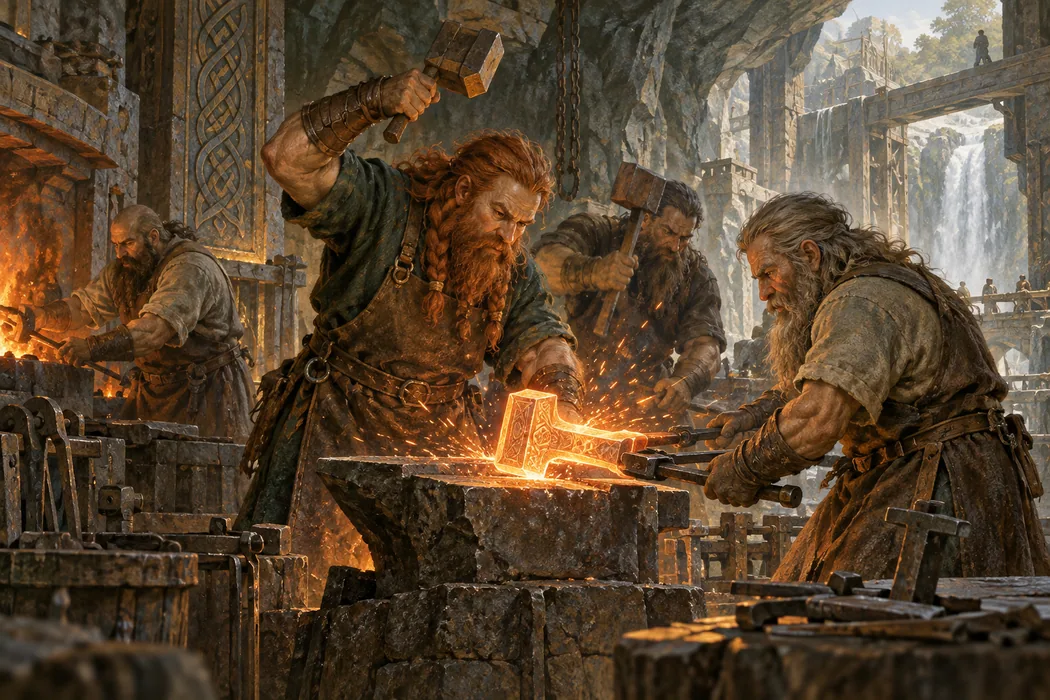
Völuspá lists dwarven names; Snorri recounts expert makers of treasures such as Mjöllnir and Gullinbursti. Origin accounts and the relation to dark elves differ.
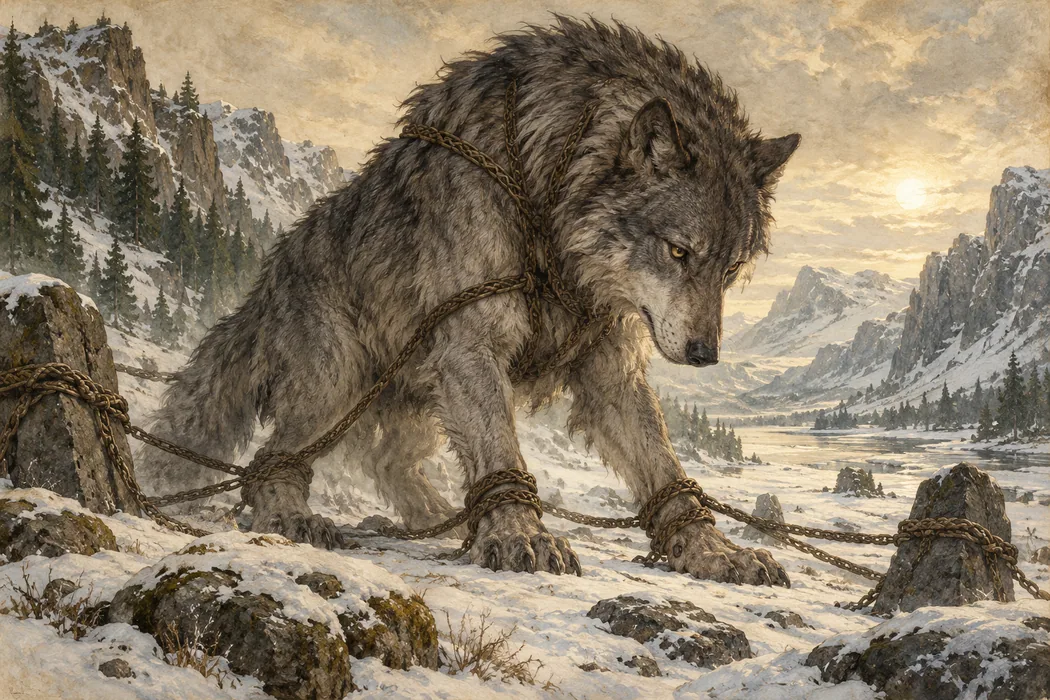
The gods bind Fenrir by a trick; he takes Týr’s hand and later breaks free at Ragnarök. The binding and its cost deserve to be read together.
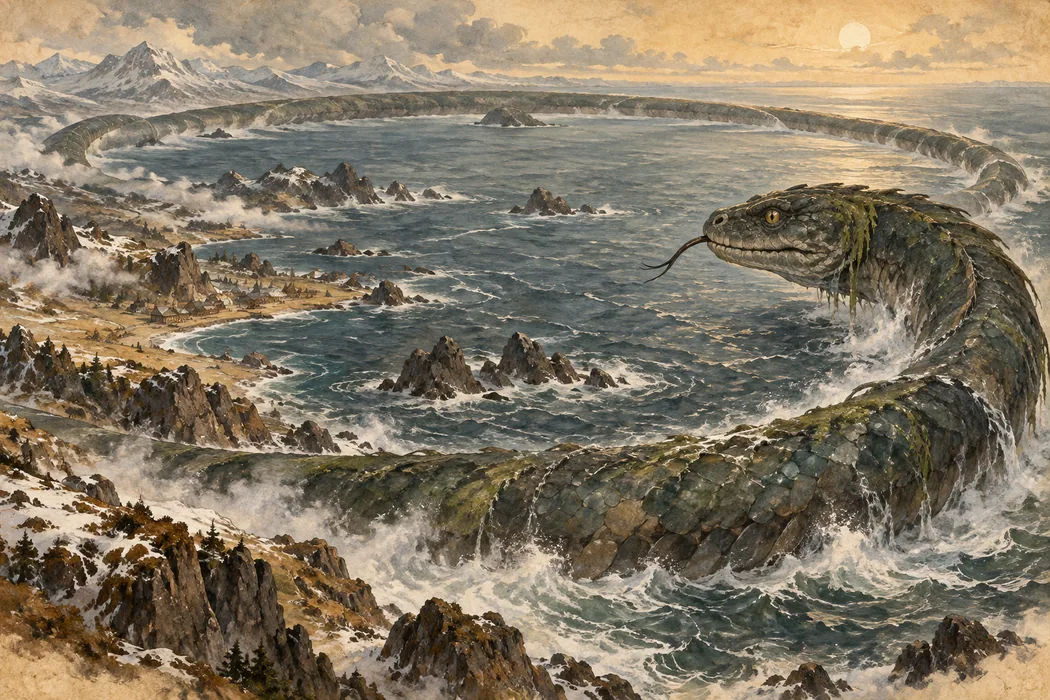
The serpent circles Midgard and meets Thor in both a fishing tale and the end of the world. It is more than an obstacle in one hero’s story.
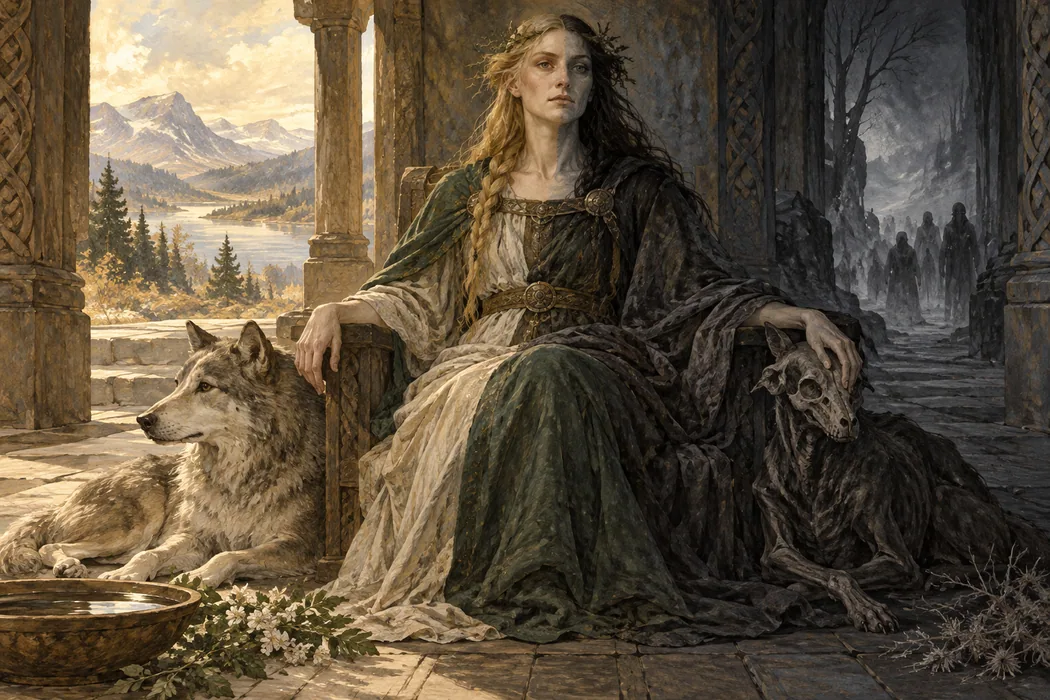
Loki and Angrboða’s daughter is assigned rule over many of the dead; Hel also names her realm. She is not simply a Norse equivalent of a Christian devil.
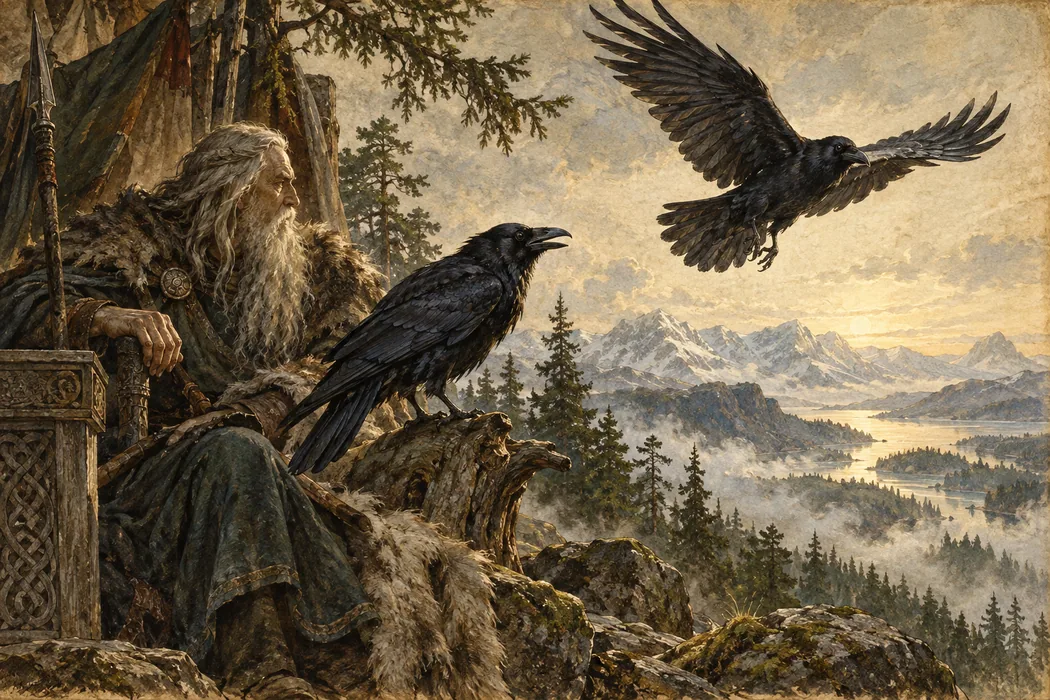
Odin’s ravens fly out and bring news back. Their names are commonly rendered Thought and Memory.
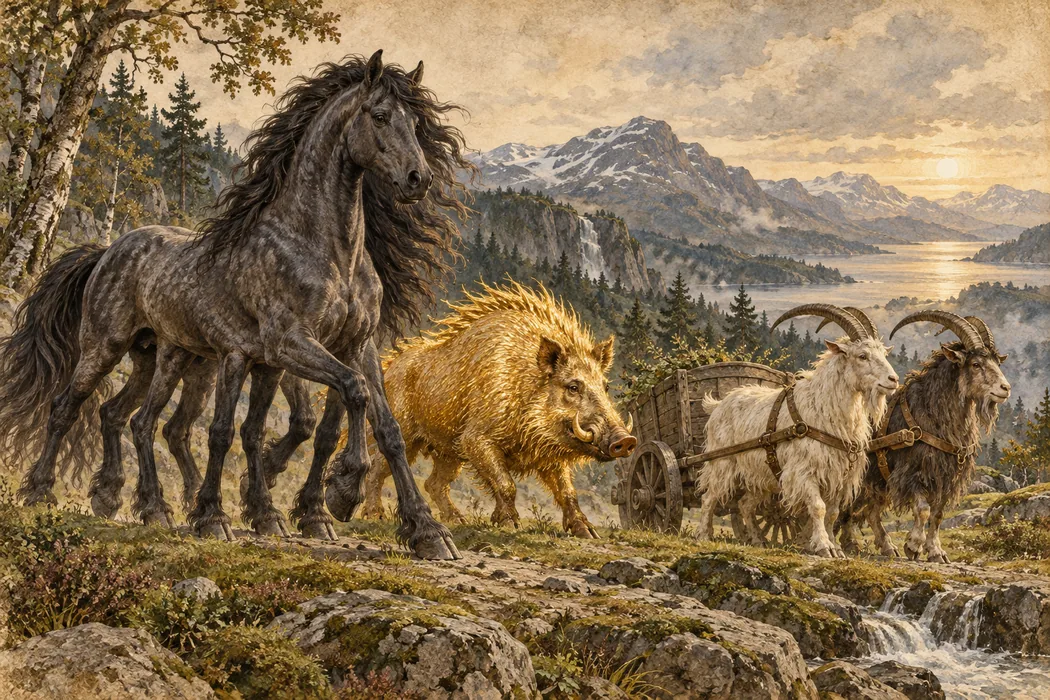
Odin’s eight-legged horse, Freyr’s golden boar, and Thor’s goats carry or accompany gods. The tales often point back to craft, bargains, and unintended consequences.
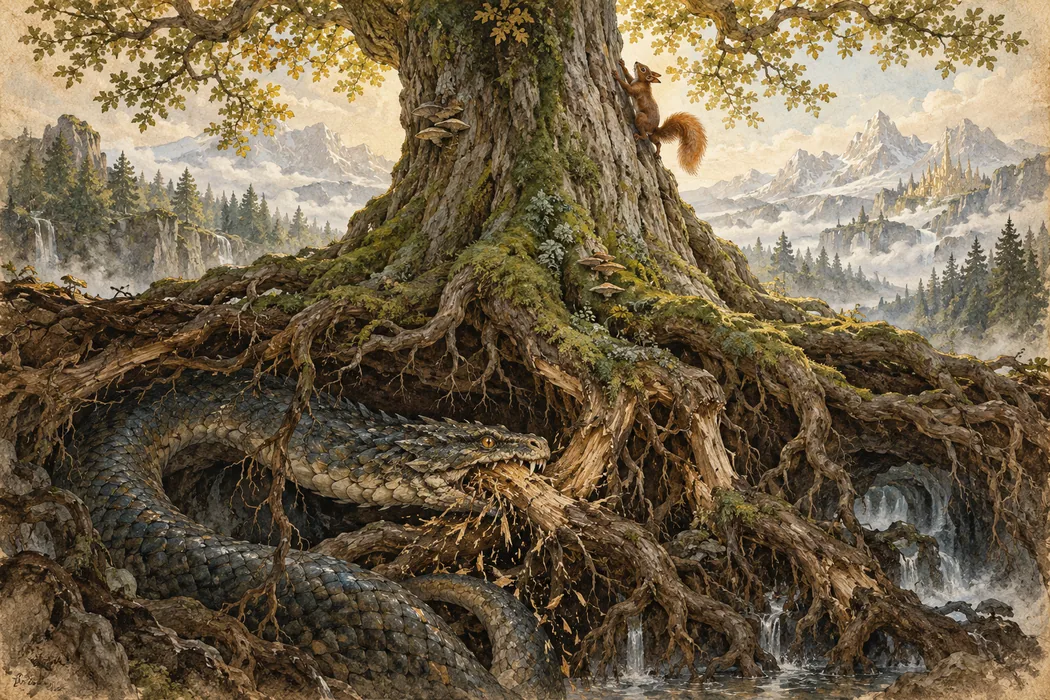
Níðhöggr gnaws below Yggdrasill, while Ratatoskr runs between an eagle above and the serpent below carrying words.
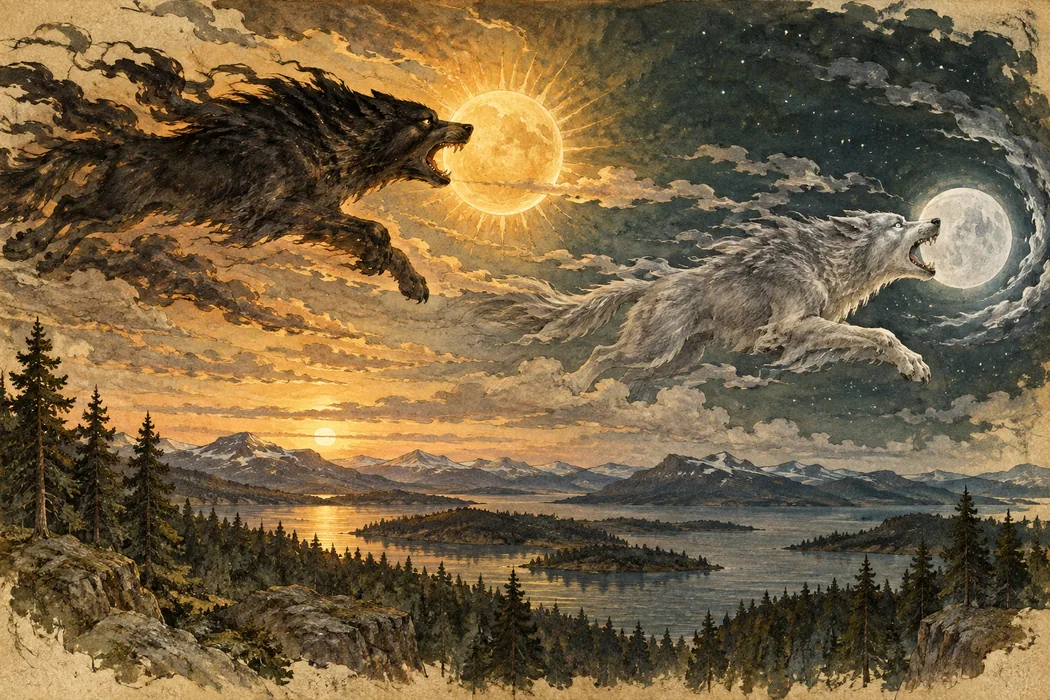
In Snorri’s telling wolves pursue the sun and moon; their names and relationships are not uniformly detailed across the older poems.
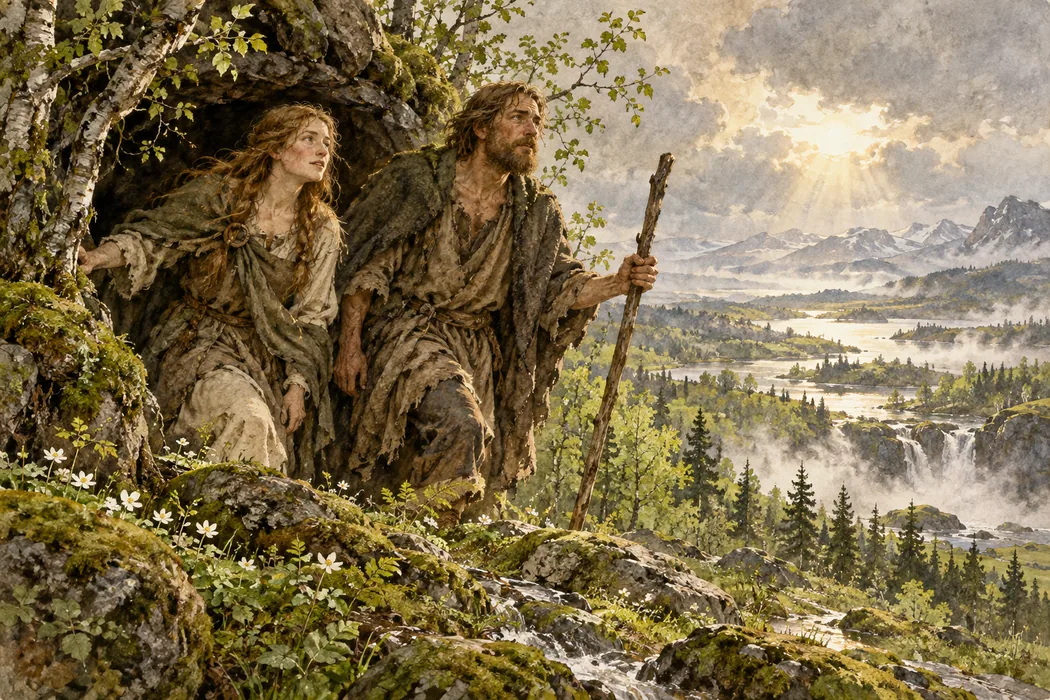
A human pair survives the world’s destruction and becomes part of its renewal in Vafþrúðnismál and Snorri’s account.
These older English translations are freely readable. Translation choices and stanza numbers differ; the historical record does not give us a single instruction book for living Heathenry.
Some people feel drawn to Odin’s search, Freyja’s resolve, Týr’s costly promise, or the unresolved questions around Fenrir. No particular experience or allegiance is required to learn here. Read across sources, talk with others, and let the stories challenge you as well as comfort you.